The AI layer that turns every hospital room into a smart room

Intelligence is built into the Solo™ platform. The signals, insights, and alerts that help care teams act sooner, runs on the devices* already in your rooms. No new sensors. No re-platforming. No black box.

Doctor in a white coat holding a hand beneath a glowing digital healthcare interface with medical icons, including a heart, brain, laboratory flask, and medical cross.

Every vendor is selling AI. Few can tell you where it lives.

Bolt-on AI produces pilots that stall and tools clinicians route around. Intelligence has to be embedded where care happens.

What does it actually watch?

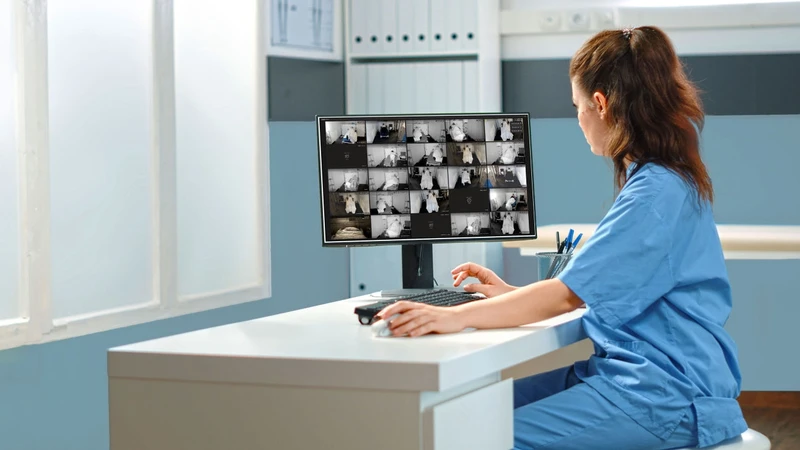
It watches patients and what’s happening in patient rooms in order to anticipate behaviors, flag future needs, or monitor vitals. 

Which workflow does it change?

It doesn’t change your workflows, but rather seamlessly integrates with what you’re already doing.

Who governs it, and what happens when it's wrong?

Bolt-on AI produces pilots that stall and tools clinicians route around. Intelligence should be embedded where care already happens.

Bolt-on AI produces pilots that stall and tools clinicians route around. Intelligence only matters when it's embedded where care already happens.

Five ways intelligence goes to work

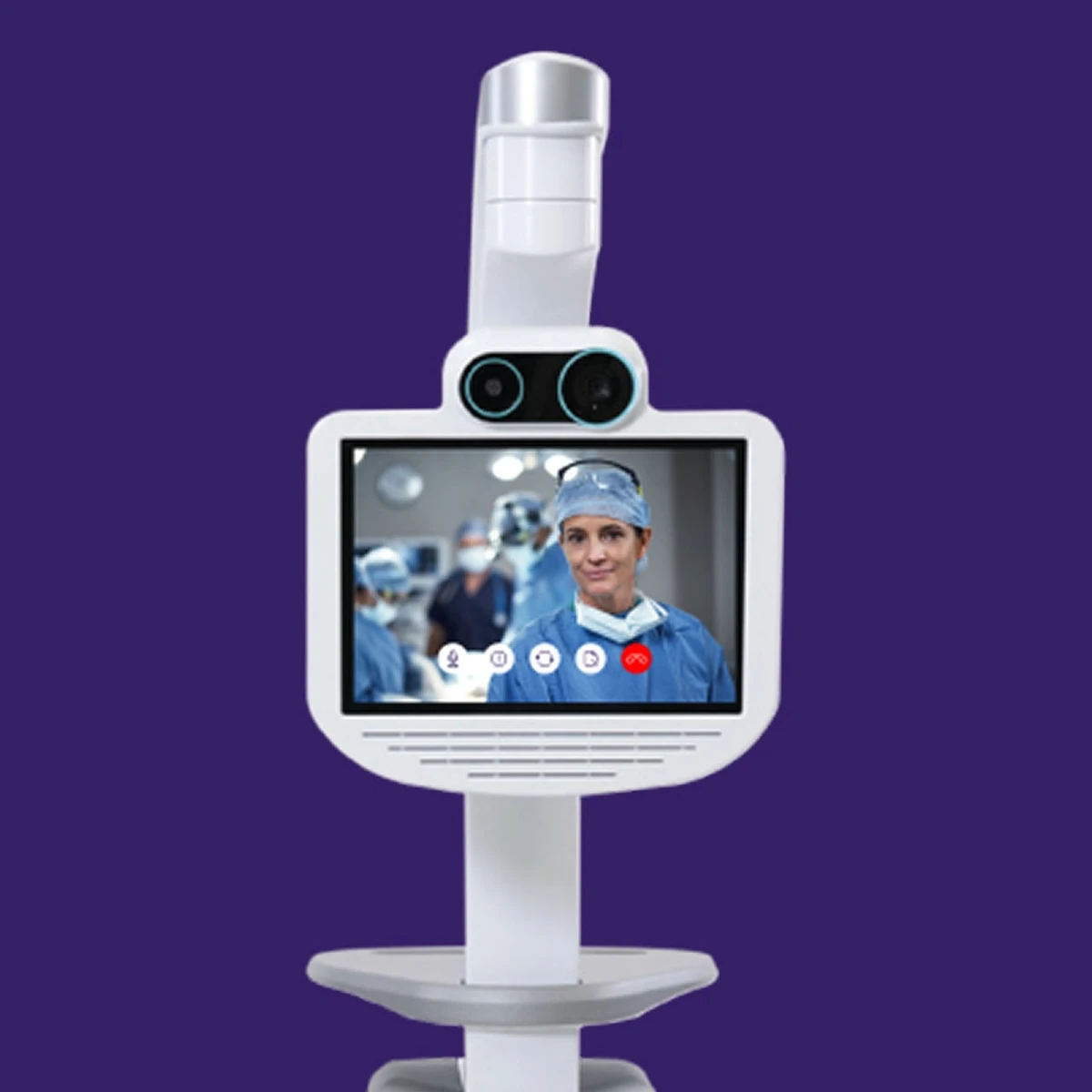
Device showing a surgeon consult

Introducing the next evolution of Solo™

New intelligence, embedded in the care workflows health systems already use.

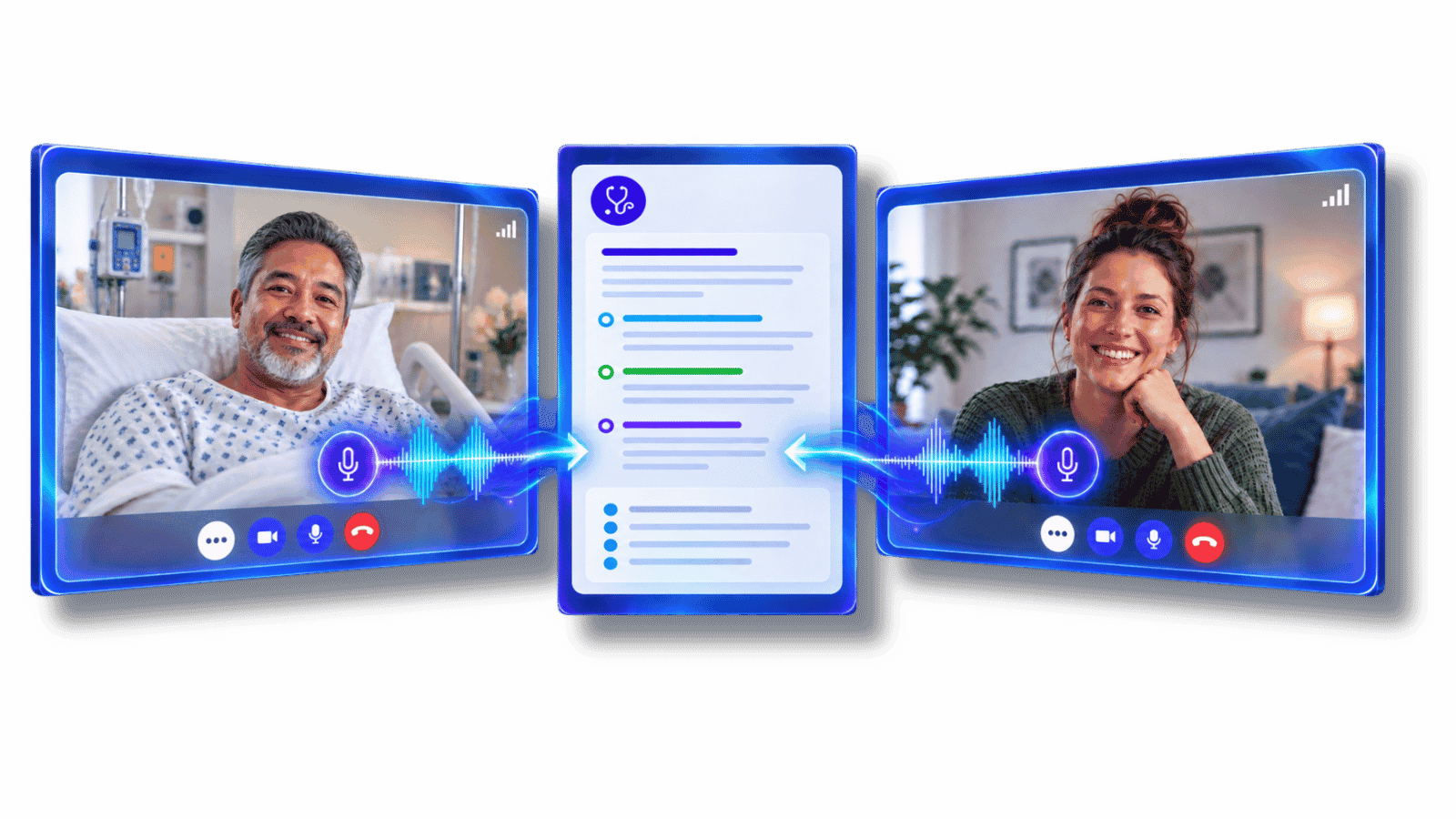
SoloScribe

Ambient documentation, built into Solo.

Keep the conversation at the center of inpatient and direct-to-patient virtual visits while ambient AI helps prepare clinical and nursing documentation in Solo or your EMR. No second application to open, no separate workflow to learn.

  • Embedded. Draft notes are created inside the Solo encounter, not in a tool alongside it.
  • Flexible handoff. Review and sign in Solo, or send the draft to your EMR.
  • Shared capacity. Encounter-based capacity that works across eligible clinicians and programs, not a seat for every individual.
Illustration showing a patient in a hospital bed and another person on a video call, with microphone icons and audio waveforms linking the conversation to a central medical document.

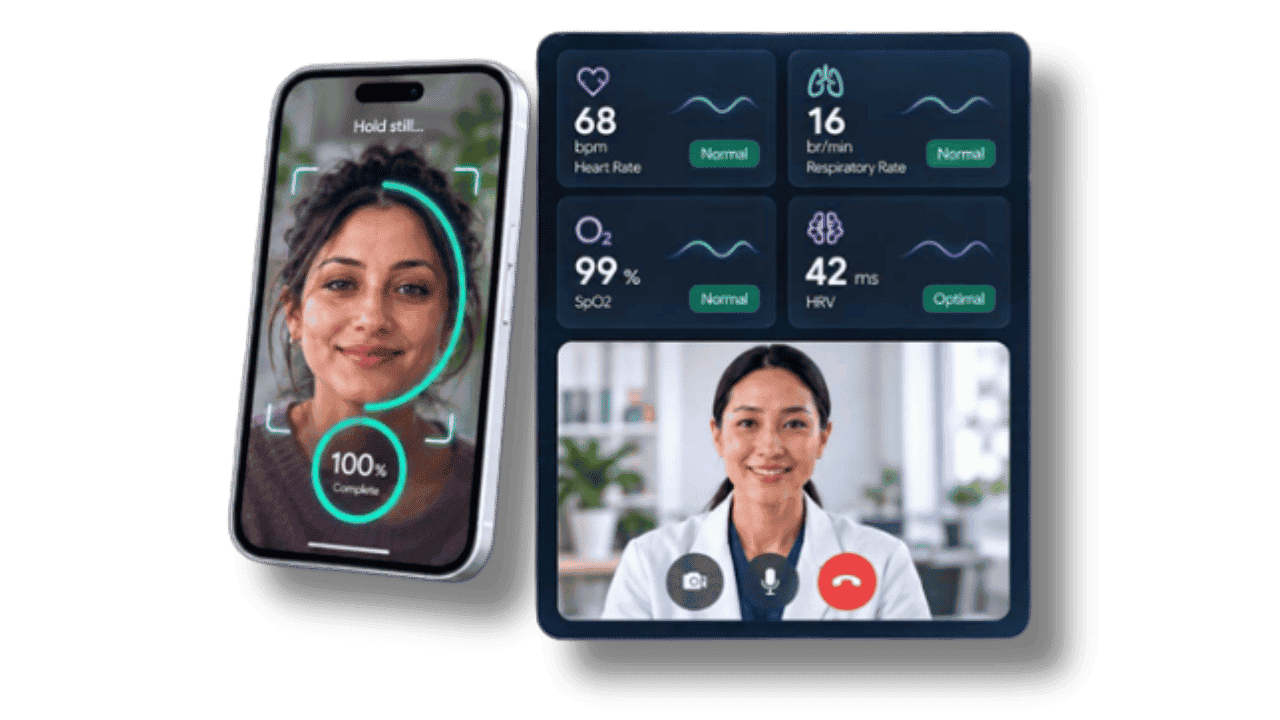
SoloVitals

Clinical signals without extra equipment, built into Solo.

Capture physiological signals without contact, using the devices* already in the room. Clinicians get more clinical context in the same Solo encounter, with nothing to hand the patient and no new workflow to manage.

  • Contactless. Signals captured without peripherals or patient handling.
  • In the encounter. Readings appear in the Solo encounter view, alongside the conversation.
  • One platform. Purchased, deployed, and supported as a Solo capability.
Illustration of remote health monitoring with a smartphone scanning a person’s face, a dashboard displaying vital signs, and a healthcare professional on a video call.

Not another AI product

This isn't AI deployed beside your virtual care program layer built into Solo. That means AI-intelligence shows up inside the workflows your teams already run: observation becomes proactive, documentation becomes lighter, consults arrive with context.

The smart room you already own

For most vendors, a smart room is a construction project — new sensors, new installs, new disruption in every room. On Solo, the room gets smarter through software. The same device that carries your consults and observation becomes the room's sensing and intelligence point, and when a new capability ships, it activates across the fleet by software update in every room, every site, at once.

AI you can stand behind

Purpose-built

Designed for care environments from the start.

Clinically embedded

Outputs land inside real clinical workflows, with human judgment making the decisions. The AI surfaces; your teams decide.

Governed

Covered by the same enterprise security, privacy, and oversight model as the platform it works across rather than a separate AI exception.

Intelligence is only as strong as the platform beneath it

Standalone AI tools ask you to trust a black box wired into someone else's stack. The intelligence layer inherits Solo's foundation — the device fleet, the EHR integration, the governance, the 24/7 managed services.

AI assisted results

500+

AI-assisted safety outcome**

100K+

documentation time saved**

80+

languages supported**

5K

AI-ready rooms or devices deployed**

Still have questions?

  • Proactive fall-risk detection, staff safety awareness, ambient documentation, real-time translation, and contactless vitals — each embedded in a live clinical workflow, with the portfolio expanding through software.

  • No — and that's the point. Intelligence is a layer of the platform: it inherits Solo's devices, integrations, and governance rather than arriving as one more system to secure.

  • No. The AI runs on the Solo devices already in your rooms, and new capabilities activate across your fleet by software update. 

  • Yes. The intelligence layer surfaces information; your clinicians decide. It's built to support clinical judgment, not substitute for it, under the same governance as the rest of the platform.

  • Most alternatives are either bolt-on AI point tools or smart-room programs that start with new sensor installations. The intelligence layer is built into an enterprise platform you may already run — inheriting its devices, integrations, and governance — so the smart room is an activation, not a construction project.

  • Most systems begin with one value stream tied to an active workflow — safety observation is the most common entry point — and then expand as results land. 

Improve the rooms you already own

*Use of the word “device(s)” in this document refers to Teladoc Health telehealth products, not medical devices as defined in Section 201(h) of the FD&C Act.
**Internal Teladoc Health data