THOUGHT LEADERSHIP
Designing successful virtual care access for rural and Tribal communities
Virtual care helps Tribal communities deliver support to populations they otherwise couldn't reach.
Eulanda Ciccarello, Program Supervisor II, Navajo Nation Employee Benefits Program
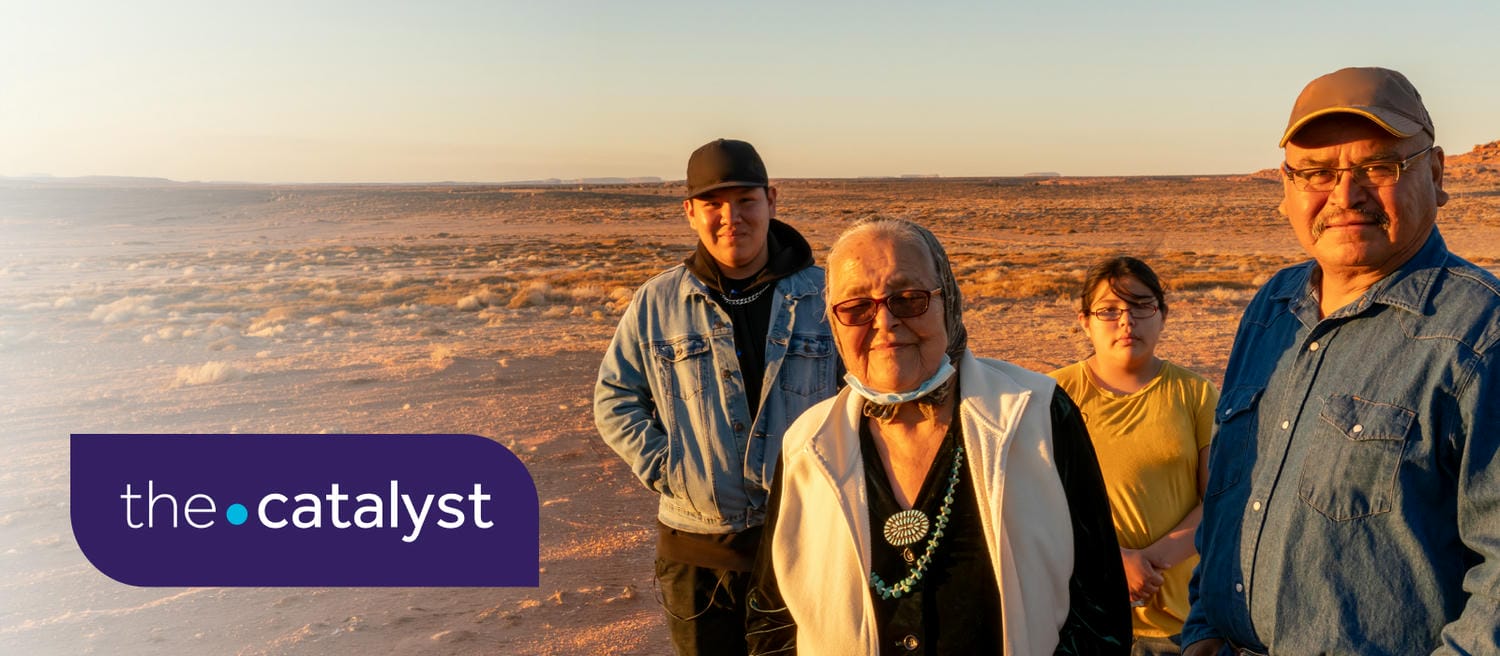
Across rural and Tribal communities, every decision about healthcare benefits carries additional weight. Working in Tribal government for the Navajo Nation, I know we don’t have the same funding flexibility as large employers, yet we are still accountable for supporting employees and their families across a vast rural landscape.
This context is exactly why virtual care has been so important to us and our communities. It allows us to extend access to services we could not otherwise consistently provide. For communities like ours where rural landscapes can be a barrier to care, access needs to be thought about and designed differently.
How virtual care helps communities with limited healthcare funding
Within the Navajo Nation and Tribal governments, funding sources are often restricted to specific services or programs. That can make it difficult to expand care through traditional models, even when there is a clear need. Staffing shortages, provider availability and travel limitations further compound the problem.
Through Teladoc Health solutions spanning urgent care, mental health and diabetes support, we were able to navigate those limitations while improving reach. This partnership has allowed us to support our communities and employees without overextending already limited resources, doing so in a way that aligns with how our people actually live and work across the Navajo Nation.
Why rural geography makes virtual healthcare access essential
In a community as large and dispersed as the Navajo Nation, spanning Arizona, New Mexico and Utah, geography shapes every healthcare decision. Barriers don’t just delay care; they discourage people from seeking care at all.
For us as members of the Navajo Nation, the challenge is compounded by the structure of Tribal government. Traditional expansion isn’t always realistic, even when the need is clear. Virtual care solutions with Teladoc Health give us a way to work within those constraints while still expanding meaningful support to employees and their families.
Mental health support was one of the most important services for us to explore providing virtually. In small, close-knit communities, comfort and privacy were top drivers in implementing Teladoc Health Mental Health.
Without an employee assistance program, we struggled to provide consistent counseling and support to employees and their families. Even when services existed locally, community members hesitated to seek care from someone they knew personally. This is especially true for frontline or community-facing employees. This made the need for private, reliable virtual mental healthcare apparent. Teladoc Health has been a solution that supports, rather than replaces, local providers, allowing people to access services they need without sacrificing anonymity and continuity.

Practical access builds trust and continuity
For benefit leaders, design only works if people can realistically use what’s offered. In rural and Tribal communities, access has to be practical, flexible and consistent, not theoretical. Virtual care helps us meet that standard for the Navajo Nation by reducing travel, simplifying entry points to care and making support available before small issues become bigger.
Virtual care provides both access in the moment and ongoing continuity. When care is dependable and easier to reach, people are more likely to engage. This means they’re more likely to follow up on care needs and ask for help early to reduce downstream complications. That consistency is essential for building trust, especially in communities that have historically faced limited access to health services.
Our benefits strategy when implementing Teladoc Health was to focus on services our communities couldn’t otherwise reach or sustain long-term. Virtual care supports that strategy by allowing us to stretch limited resources further without asking people to overcome unnecessary barriers just to get the help they need.
The results have been incredible:
$188,000 net claims savings across programs1
2.4% reduction in A1c for enrolled members seeking support for diabetes and starting with an A1c greater than or equal to 7%2
269% increase in mental health visits (compared to 2024)1
106% increase in 24/7 Care visits (compared to 2025)1
91% enrolled member satisfaction and +77 Net Promoter Score for 24/7 Care visits1
When access is built in, care will follow
For us, virtual care isn’t just about innovation for its own sake; it’s about a responsibility to provide accessible care. We needed a way to extend care that was realistic, respectful and sustainable. When access is built into the design of benefits, it changes what’s possible, especially for organizations facing constraints.
Teladoc Health allows us at the Navajo Nation to better serve our population, meeting them where they are and making thoughtful use of the resources we have, all while continuing to advocate for the care our communities deserve.
1 Teladoc Health unified business review, prepared for Navajo Nation, data through December 2025
2 Teladoc Health business review, prepared for Navajo Nation, June 2026