
31 days of mental self-care

Caring for your mental health is as important as caring for your physical health. All of the systems in your body work together, and when one thing is out of sync, the others can be impacted.
Believe it or not, eating, sleeping, exercising, socializing and how you’re talking to yourself can affect your mental health. Here are 31 activities that encompass all these categories. Every activity will positively impact your mental health. Use this calendar as a to-do list and try to accomplish one action each day.
Remember, you can do any of these any day of any month.
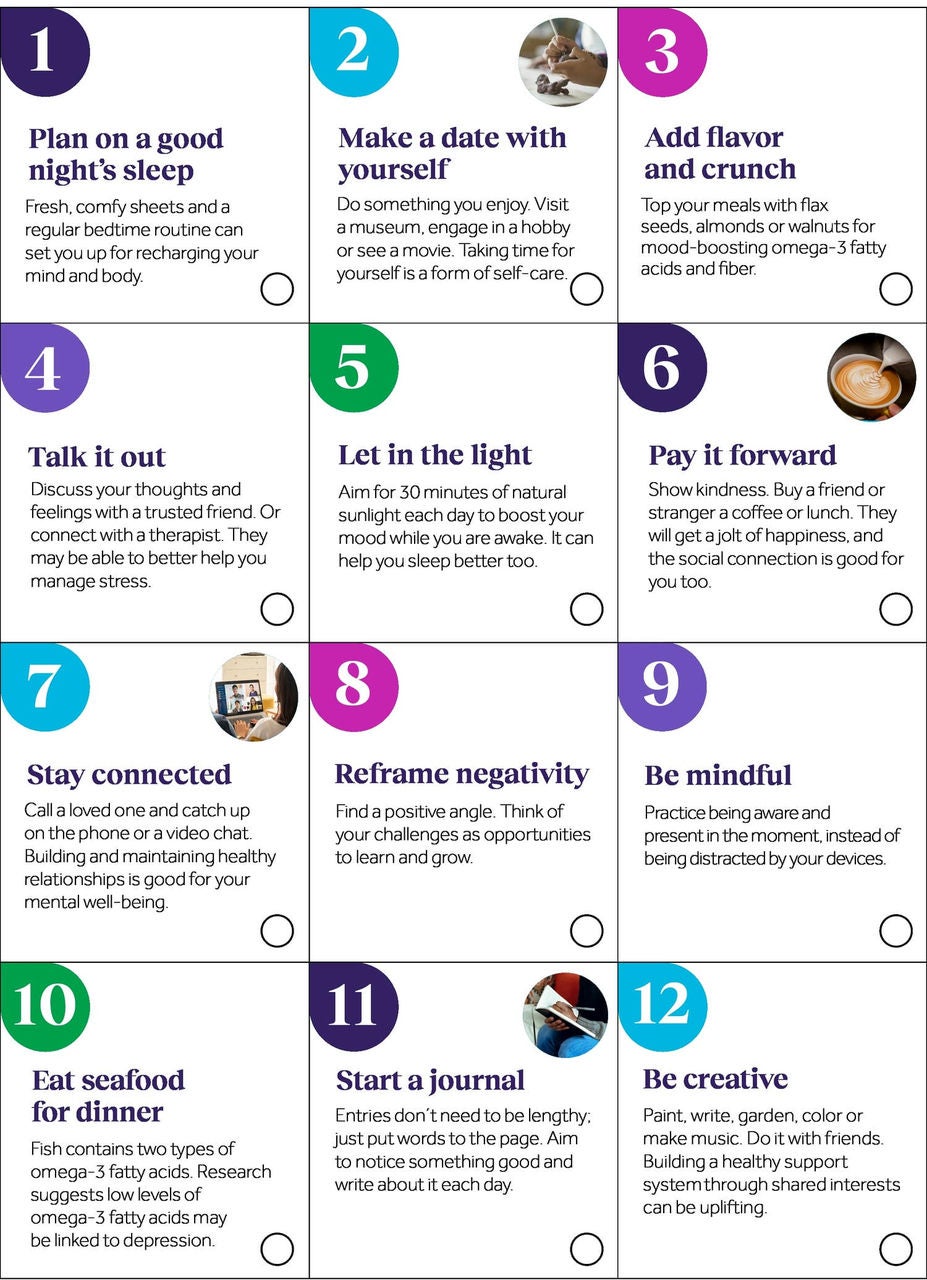
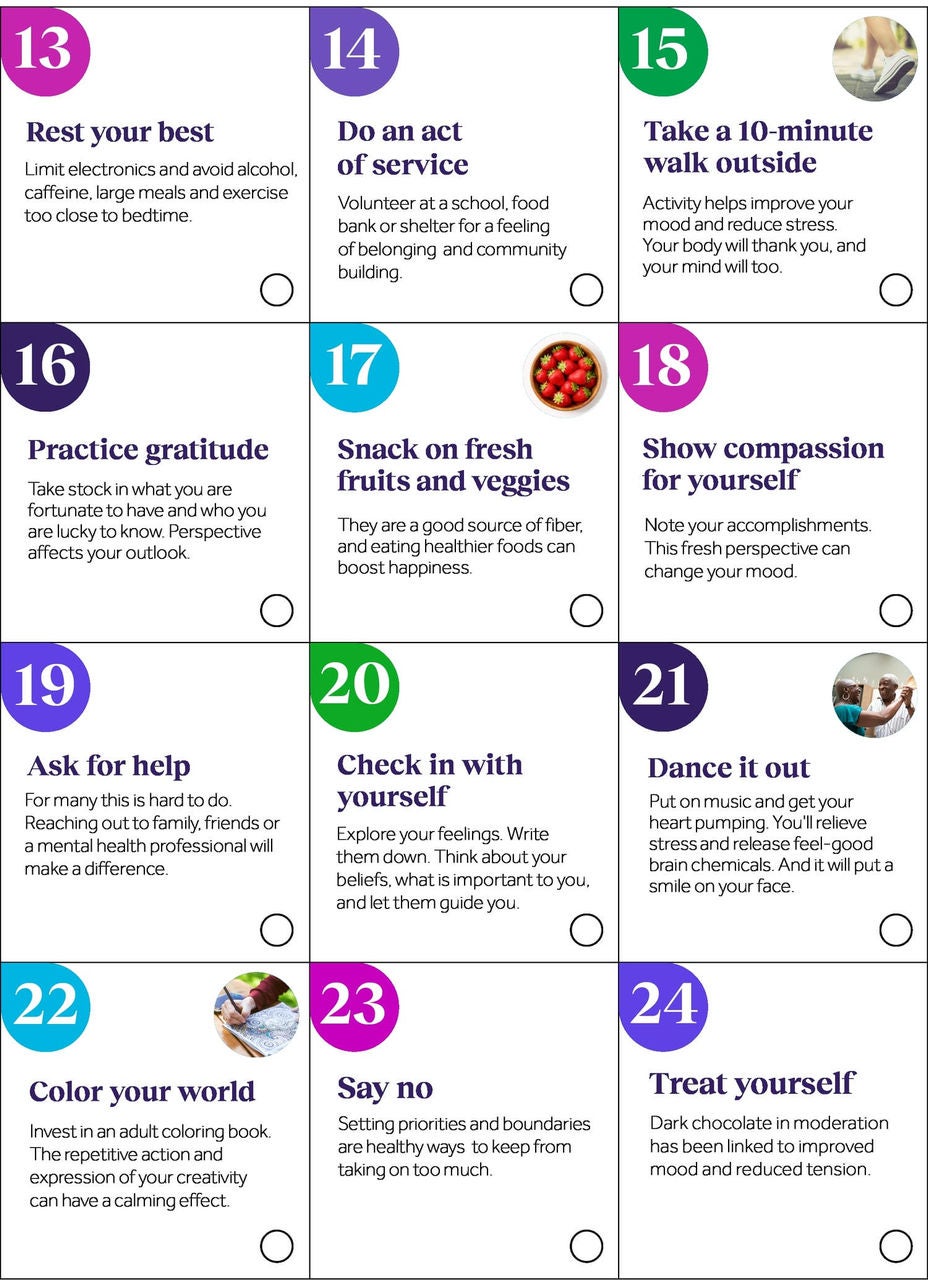
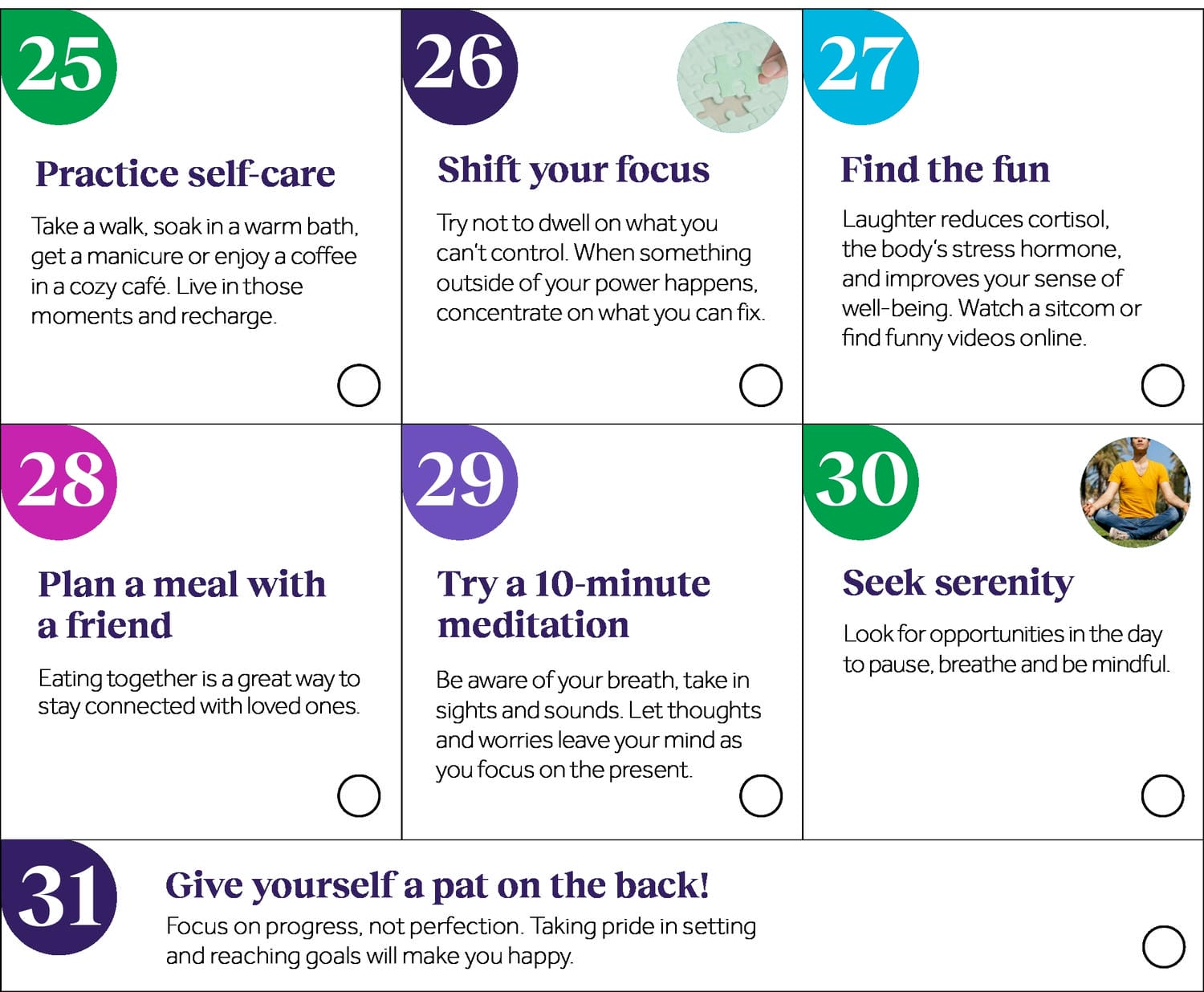
Congratulations—you’re on the road to improving your emotional health!
Now keep it going. Draw from what you’ve learned along the way to stay in touch with yourself.
You may not be eligible for all services. Log in to view the benefits included in your plan.
Sources
National Institutes of Health (NIH). Emotional Wellness Toolkit.
https://www.nih.gov/health-information/emotional-wellness-toolkit
Accessed April 6, 2026. [nih.gov]American Heart Association. Food and Mood. December 8, 2023.
https://www.heart.org/en/healthy-living/healthy-lifestyle/mental-health-and-wellbeing/food-and-mood
Accessed April 6, 2026. [heart.org]Academy of Nutrition and Dietetics. What Are Omega‑3 Fatty Acids? March 1, 2022; reviewed May 17, 2024.
https://www.eatright.org/health/essential-nutrients/fats/what-are-omega-3-fatty-acids
Accessed April 6, 2026. [eatright.org]Psychology Today. Why Laughter Is Such Good Medicine. Updated September 2, 2024.
https://www.psychologytoday.com/us/blog/evidence-based-living/202408/why-laughter-is-such-good-medicine
Accessed April 6, 2026. [psychologytoday.com]
Was this article helpful?
Sign up to unlock your health, your way at no cost to you.
This content is not intended to be a substitute for professional medical advice, diagnosis or treatment. Always seek the advice of your physician or other qualified health provider with any questions you may have regarding a medical condition.
You may not be eligible for all services. Log in to view the benefits included in your plan.