
How a digital detox improves your wellbeing
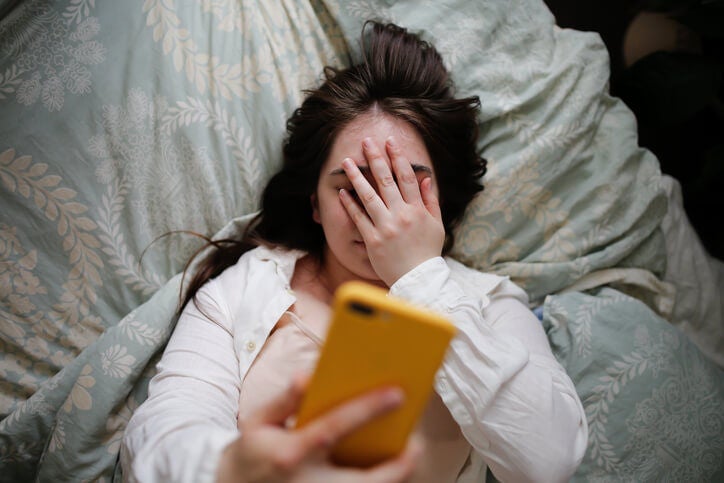
Adults who use the internet spend an average of 6 hours and 30 minutes per day looking at screens, according to a 2025 report from insights firm DataReportal. While modern technology has many benefits, from allowing you to see far-away family members face-to-face to healthcare visits from the comfort of your home, too much screen time can also have drawbacks. The impacts of too much screen time can range from physical concerns like eye strain, back pain and poor posture to mental health and emotional stress.
If you spend a lot of time on screens and are not feeling like your best self, a digital detox may be just what you need. A digital detox is defined as “a voluntary reduction or temporary cessation of device use,” according to a 2025 review by researchers at the University of North Carolina Chapel Hill and Alfred University published in the journal Cureus.
Too much screen time may even be aging you: Five or more hours of daily leisure screen time was linked with accelerated biological aging at the cellular level, according to a 2026 study published in the journal Medicine & Science in Sports & Exercise. Research shows that cutting back on screen time can restore focus, improve sleep and boost your mental health.
If you’re feeling a constant sense of anxiety or overwhelm or experiencing sleep disturbances or even headaches or visual problems, a digital detox may help. Read on for more about how it can help—and how to make it happen.
What is a digital detox?
A digital detox can mean anything from cutting back on your screen time to taking a break entirely. It doesn’t mean giving up screens forever. You won’t be required to forgo email in favor of postcards, or pull out your old paper maps instead of using a navigation app. In short: You decide the rules.
Digital detoxes are not only for people who are the heaviest users. Many adults—and younger people—could cut back on their screen habits.
There are a variety of digital detoxes. If you’re thinking of cutting back, consider these three options:
Full detox: Temporarily disconnecting from all personal electronic devices, including smartphones, tablets and laptops. This may work best when you’re on vacation. Going “cold turkey” can cause anxiety; however, it can also help you quickly notice differences in yourself.
Partial detox: Selectively limiting screen time, without totally disconnecting from it. You may want to take a break from social media apps or change your notifications so you’re not always getting reminded of them. You can also create “screen-free” zones in your home, only allowing screen time in specific locations.
Time-bound detox: Creating guardrails in the form of time restrictions. You may decide that screens are only allowed during certain parts of the day. This allows you to break the cycle of constant, unconscious use and bring some awareness back to your screen time choices.
The science behind digital overload
It’s no wonder we find it hard to put our screens down. The more we scroll, the more our brains release dopamine—also known as the “feel good” hormone. Every time your phone buzzes with a notification, or you’re looking through Instagram posts, your brain anticipates a reward and releases dopamine. It’s unpredictable and exciting, and your brain craves more.
Many people know the feeling—you pick up your phone to check the time, and next thing you know you’re scrolling through a social media app and 15 minutes have gone by. You may be stuck in a dopamine loop, where you’re mindlessly searching for more excitement (and you still don’t know what time it is).
Devices also make it harder to focus. On the surface it seems we can do so much more because of our smartphones. Log in to a meeting while you’re walking the dog; buy groceries while you wait for your friend to get to dinner. At the same time, however, our attention spans are declining. According to University of California, Irvine, psychologist Gloria Mark, PhD, our attention spans are now at about 47 seconds on any screen. The more your attention switches, says Mark, the higher your blood pressure and stress levels. It also slows our productivity and makes us more prone to errors.
Another factor is the blue light that screens like smartphones and computers emit. As natural light decreases when the sun goes down, our bodies begin to produce melatonin, the hormone that helps us know when it’s time to sleep. Using screens later in the day can trick our bodies into thinking it’s not time to release melatonin. This can disturb our bodies’ normal rhythms and disrupt sleep patterns.
What’s more, too much screen time can have an impact on your self-esteem. Social media apps can help connect you to others and help you stay in communication. However, social media can also be a “highlights reel” of other people’s lives. You may only see the best, most glamorous moments—not the struggles and anxieties most people deal with every day. Adults who use social media may be more at risk for depressive symptoms, according to research from Harvard University.
Six possible benefits of a digital detox
- Improved sleep quality. Cutting back on blue light can help your body reset its internal clock. The blue light emitted by screens gets in the way of your body’s production of melatonin, which helps you wind down at the end of the day.
- Sharper focus and mental clarity. Taking a break from screens can stop the constant cycle of switching tasks and fractured attention. As you improve your focus, you reduce distractions and the risk of errors.
- Reduced anxiety. Stepping away from screens can give you a break from constant notifications, which can lower your stress hormone levels. While this may feel unsettling at first, your body will readjust to less “excitement.”
- Stronger in-person relationships. Screen time may be crowding out more beneficial activities. Instead of “liking” a friend’s post, meet up for coffee and get the whole story behind the photo.
- Better productivity. Breaking the cycle of constant distractions can ease fatigue and help you stay engaged. Notifications and frequently switching tasks can make you lose your train of thought. Focusing on one thing at a time will help reduce that chaos.
- Improved physical health. Instead of being hunched over your screen, you’ll have the chance to stand tall, reset your posture and give your eyes a rest.
Signs you may need a digital detox to reduce screen time
Do you have any of the following signs? You may be due for a digital detox:
Phantom phone vibrations or pings
Trouble sleeping
Anxiety when your phone isn’t nearby (also called “nomophobia,” or fear of not having a mobile phone)
Low attention span
Comparing yourself to others
How to reduce screen time with a digital detox
- Audit your screen time using in-device apps. Seeing how much time you’re spending on various apps can be a reality check.
- Set a clear goal and time frame. Digital detoxes can take on many different forms. Think about what timing could work well for you.
- Decide on your detox. Are you going to go cold turkey on a full detox? Or limit use to certain rooms in your home as a partial detox? Maybe you’ll only be online during working hours. Set the right expectations for yourself.
- Let people know. If friends and family are used to you being on call, let them know your plan. This can help ease some of your anxiety around setting new boundaries.
- Replace screen habits with other activities. Think of all the things you could do with time you’ve been spending scrolling. Reading a book, catching up with friends, taking short walks (spending as little as 20 minutes outdoors can lead to lower levels of the stress hormone cortisol, according to a study published in the journal Frontiers in Psychology).
- Reflect on the changes. You may like what you see! Make a conscious decision about how you want to use screens in the future.
Frequently asked questions
How long should a digital detox last?
A digital detox can last as long as you’d like—there’s no set rule. It could be a single evening, a weekend away or a longer commitment like limiting screens to work hours only. The key is choosing a time frame that’s realistic for your life. Just be sure to set clear expectations for yourself before you begin.
Can a digital detox help with anxiety and depression?
It may. Constant notifications and the pressure of social media can raise your stress hormone levels and contribute to feelings of anxiety. Spending time on social media may also increase the risk of depressive symptoms, according to research from Harvard University. Stepping away from screens can give your nervous system a break from constant stimulation. What’s more, time spent outdoors replacing screen habits, even just 20 minutes, has been shown to help lower cortisol levels according to a study published in the journal Frontiers in Psychology.
What counts as a digital detox? Do I need to give up everything?
Not at all. A digital detox can range from a full break from all devices to simply turning off notifications, avoiding social media or making certain rooms in your home screen-free. You set the rules. The goal is to bring more awareness and intention to your screen time, not to give it up permanently.
How do I avoid relapsing after a digital detox?
The final step of any detox is reflection: Taking stock of how you feel and making a conscious decision about how you want to use screens going forward. Rather than defaulting to old habits, use what you learned during your detox to set new boundaries. That may mean keeping certain screen-free zones, staying off social media in the evenings, or continuing to audit your screen time regularly.
Is a digital detox the same as a social media detox?
A social media detox is one form of a digital detox, but it’s not the same thing. A digital detox can apply to all screen use (smartphones, tablets, laptops and TV). A social media detox focuses specifically on stepping away from specific platforms. If social media is your primary concern, a targeted partial detox focused on those apps alone may be a good place to start.
Take back your time
The research is clear: Stepping away from screens, even temporarily, can improve your health and well-being. Better sleep, sharper focus and lower stress levels are three of the most immediate benefits people notice when they cut back on screen time. Plus, a digital detox costs nothing and can start today.
You don’t need to go cold turkey. Start small tonight: Put your phone in another room before bed. It’s one of the simplest swaps you can make, and your body will thank you.
From there, use your phone’s built-in screen time tracker to see where your hours are actually going. What you find might surprise you—and motivate you to take the next step.
If you’re concerned about your digital habits, connect with a therapist or mental health resources through Teladoc Health.
You may not be eligible for all services. Log in to view the benefits included in your plan.
Sources
- Blue in the face: The effects of blue light on sleep. Society of Behavioral Medicine. Accessed June 19, 2026
- Devi KA, Singh SK. The hazards of excessive screen time: Impacts on physical health, mental health, and overall well-being. Journal of Education and Health Promotion. 2023;12:413. doi:10.4103/jehp.jehp_447_23
- Digital 2025: Global Overview Report. DataReportal. Accessed June 19, 2026.
- Dopamine. Cleveland Clinic Health Library. Accessed June 19, 2026.
- Hunter MR, Gillespie BW, Chen SYP. Urban nature experiences reduce stress in the context of daily life based on salivary biomarkers. Front Psychol. 2019;10. doi:10.3389/fpsyg.2019.00722
- Perlis RH, Green J, Simonson M, et al. Association between social media use and self-reported symptoms of depression in us adults. JAMA Network Open. 2021;4(11):e2136113. doi:10.1001/jamanetworkopen.2021.36113
- Setia S, Gilbert F, Tichy ML, Redpath J, Shahzad N, Marraccini ME. Digital detox strategies and mental health: a comprehensive scoping review of why, where, and how. Cureus. 2025;17(1):e78250. doi:10.7759/cureus.78250
- Speaking of psychology: Why our attention spans are shrinking, with Gloria Mark, PhD. American Psychological Association. Accessed June 19, 2026.
Was this article helpful?
Sign up to unlock your health, your way at no cost to you.
This content is not intended to be a substitute for professional medical advice, diagnosis or treatment. Always seek the advice of your physician or other qualified health provider with any questions you may have regarding a medical condition.
You may not be eligible for all services. Log in to view the benefits included in your plan.