
Body awareness: Maintaining balance for fewer injuries
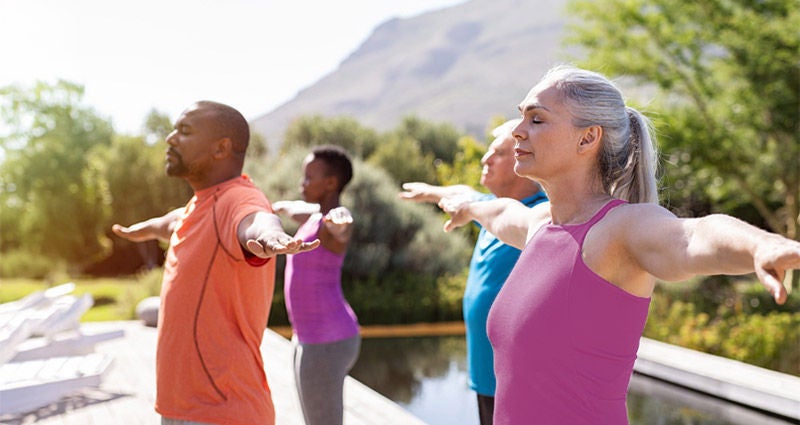
When our bodies are performing at optimal levels, everything works. Moving is not a challenge—we just go. But as we age, we may notice slight adjustments we have to make to move as effortlessly as we once did.
You may not realize this, but if you’re older than 30, changes could be happening to you that affect your balance. It happens gradually as your inner ear structures, muscle strength, brain processing speed and body awareness naturally decline.
It’s not all bad news. By simply being aware of this decline, which happens to all of us, you can focus on ramping up the activities that can keep your balance on an even keel. See below for steps you can take today.

Start off on the right foot
Shoes and socks that fit properly will set you up for success, whether going for a long walk or just making your way through the day. When choosing shoes, consider:
- A snug fit to provide a solid base
- Good heel support to prevent heel slippage
- Moderate cushioning for comfort
- Low heel height for stability
Skip shoes with flexible soles, like slippers or sandals. These can cause unsteadiness.
Health conditions matter
There is a long list of things that could make you dizzy or affect your balance. If you are experiencing these symptoms, talk to your healthcare provider. Chronic conditions and certain medications could be the cause. There are other reasons you may feel off-kilter:
- Vision changes like depth perception and light sensitivity.
- Changes in blood pressure, especially when standing up quickly (postural hypotension).
- Decreased mobility and strength. Muscles and joints play a major role in providing stability and support.
Bolster your balance
There are simple steps you can add to improve your balance:
- Stand on one foot when you’re brushing your teeth or chatting with a neighbor. Don’t be afraid to use a table, counter or sturdy surface if you need support.
- Stand up from a seated position without using your hands.
- Walk in a line, heel-to-toe, for a short distance.
- Consider practicing yoga or tai chi. They strengthen muscles and challenge your active moving and static balance skills.
Before starting any new exercise routine, talk to your healthcare provider to make sure it’s safe.
You may not be eligible for all services. Log in to view the benefits included in your plan.
Source
Wang, J., Li, Y., Yang, G.-Y., & Jin, K. Age-Related Dysfunction in Balance: A Comprehensive Review of Causes, Consequences, and Interventions. Aging and Disease. 2024.
https://www.aginganddisease.org/EN/10.14336/AD.2024.0124-1
Accessed April 2, 2026. [aginganddisease.org]Centers for Disease Control and Prevention (CDC). About Older Adult Fall Prevention. CDC. January 27, 2026.
https://www.cdc.gov/falls/about/index.html
Accessed April 2, 2026. [cdc.gov]American Podiatric Medical Association (APMA). Balance-Boosting Footwear Tips for Older People. APMA.
https://www.apma.org/patients-and-the-public/tips-for-healthy-feet/balance-boosting-footwear-tips-for-older-people/
Accessed April 2, 2026. [apma.org]Fisher, J. Fall prevention: Strategies to help keep you from falling down. Harvard Health Publishing. December 5, 2023.
https://www.health.harvard.edu/staying-healthy/fall-prevention-strategies-to-help-keep-you-from-falling-down
Accessed April 2, 2026. [health.harvard.edu]Harvard Health Publishing. Easy ways to improve your balance. Harvard Health Publishing. May 6, 2021.
https://www.health.harvard.edu/staying-healthy/easy-ways-to-improve-your-balance
Accessed April 2, 2026.
Was this article helpful?
Sign up to unlock your health, your way at no cost to you.
This content is not intended to be a substitute for professional medical advice, diagnosis or treatment. Always seek the advice of your physician or other qualified health provider with any questions you may have regarding a medical condition.
You may not be eligible for all services. Log in to view the benefits included in your plan.