
Yoga for better digestion
Key points
- Some yoga poses can stimulate digestive activity by adding pressure to key parts of the body.
- Yoga has been shown to help improve stress management and sleep, which can impact digestive health.
- Yoga cannot fix all digestive problems. Talk to your care provider if your digestive issues are persistent or severe.
Digestion is the process your body uses to break down food to use it for fuel. Bloating, gas and feeling sluggish are just a few ways digestion can feel uncomfortable. Digestion happens in the background as we live our lives. Sometimes you might feel some uncomfortable sensations as a result.
Not only is yoga a great way to stay active, some yoga poses may help mild digestive discomfort. For more severe or persistent digestive trouble, a visit with your care provider might be best.
Can yoga really help with digestion?
For some people, the answer is yes. But whether or not yoga can help you depends on what’s causing the digestive issues. Things like stress, lack of movement and poor sleep can disrupt your normal digestive flow. Yoga has been shown to help people reduce stress and improve sleep. In addition, certain yoga poses apply pressure to key parts of the body. This pressure can stimulate the digestive tract in different ways to move food along and help you feel better.
What are the best yoga poses for digestion?
A consistent yoga practice may help with digestive issues over time. But for more immediate relief, poses that twist, fold or lightly press the belly can help. Here are five yoga moves to start with.
Knees-to-chest
Floor or mat: Lie on your back with your legs outstretched. Take a deep breath in. When you breathe out, bring one knee toward your chest and hold it there with your hands. Stay in this pose for two or three deep breaths, then switch. If it feels good, try doing both knees at the same time.
Chair: Sit with your back tall, shoulders relaxed and both feet on the ground. Breathe out and lift one knee to your chest and hold it there with your hands. Stay in this pose for two or three deep breaths, then switch. If it feels good, try doing both knees at the same time.
Seated spinal twist
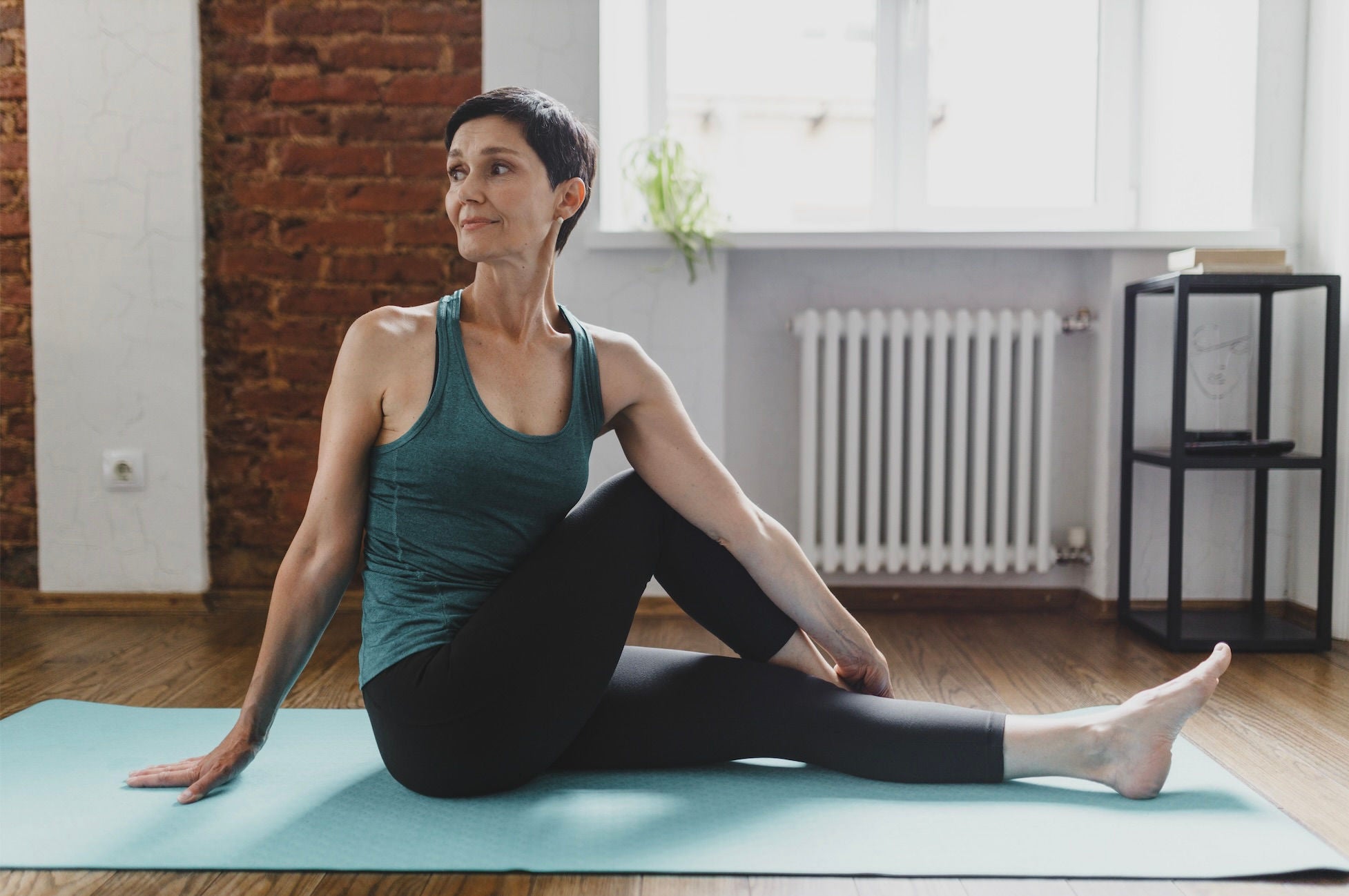
Floor or mat: Sit with your legs in front of you. Take a deep breath in and bring the sole of your right foot to the ground. Wrap your left arm around your right knee and look over your right shoulder. Stay in this pose for a few breaths before switching sides.
Chair: Place both feet flat on the ground. Take a deep breath and place your right hand on your left knee. Place your left hand behind you and look over your left shoulder. Stay here for a few breaths before switching sides.
Child’s pose
Floor or mat: Bring your hands and knees to the floor. Sit on your heels while your hands remain on the ground in front of you. You can separate your knees wider if that feels more comfortable. Take a deep breath in. Exhale and slowly bring your head to the ground. Place a pillow under your head if you cannot reach the ground or would like extra padding. For a deeper stretch, walk your hands out farther away from you.
Chair: Sit up tall at the edge of your chair with both feet flat on the ground. You may want to use a table or wall in front of you for support. Sit far enough back from the wall or table so that you have enough space to fold forward. Take a deep breath in. When you breathe out, reach both arms out in front of you and fold forward so that your head is just above your knees. For support, you can hold on to a table or wall. Stay here for two to three breaths.
Forward fold
Floor or mat: Exhale and fold over your legs as much as is comfortable.
Chair: Sit near the front of the chair with your feet slightly wider than your hips. Exhale and hinge forward from your hips, sliding your hands down your legs or toward the floor. Let your head and neck relax if that feels comfortable. Take two or three breaths, then slowly return to sitting.
Cat cow
Floor or mat: Bring your hands and knees to the floor so that your hips are right over your knees and your shoulders are right over your wrists. Take a deep breath in and arch your upper back. Bring your chest forward and your shoulders back. If it is comfortable, you may tilt your head back to open your chest and throat. As you exhale, round your upper back. Bring your chin close to your chest. Cycle through these motions three or four times.
Chair: Sit tall with both your feet flat on the ground. Bring the palms of your hands to your knees. Take a deep breath and arch your upper back. Bring your chest forward and your shoulders back. If it is comfortable, you may tilt your head back to open your chest and throat. As you exhale, round your upper back. Bring your chin close to your chest. Cycle through these motions three or four times.
Remember to move slowly and mindfully. If you feel any pain, don’t try to push past it. Stop and check in with yourself.
When to talk to a care provider
While yoga can be a great tool to help ease mild discomfort, it’s not a replacement for care. If your symptoms last for more than two weeks or disrupt your daily activity, talk to your care provider.
Main takeaway
Yoga is a gentle way to ease mild bloating and gas. Poses that twist, fold or press on the belly help food move along, while regular practice can calm stress and support better sleep. If symptoms last more than two weeks, check in with your care provider.
FAQs
Does yoga help with digestion?
For some people, yoga may help with occasional digestive issues. Some poses twist, fold or gently press on the belly. This can help food move along. Yoga may also help alliviate stress and sleep troubles, which can affect your digestive health. Yoga is not a cure, but it can be a helpful habit.
How long does it take for yoga to help digestion?
Some people feel better in just a few minutes after gentle poses. Other benefits, like less stress and better sleep, can take a few weeks of regular yoga. Everyone is different.
When should I see a care provider about digestive problems?
Talk to your care provider if your symptoms last more than two weeks or get in the way of your day. Get help right away if you have worsening pain, blood in your stool, weight loss you can’t explain or vomiting that doesn’t get better.
Sources
- Unlock the brain-gut connection for better digestion and health. Harvard Health. July 2, 2025. Accessed October 29, 2026.
- What to know about the gut-brain connection. Cleveland Clinic. Accessed October 29, 2026.
- Exercise for a healthy gut. Cleveland Clinic. Accessed October 29, 2026.
Was this article helpful?
Sign up to unlock your health, your way at no cost to you.
This content is not intended to be a substitute for professional medical advice, diagnosis or treatment. Always seek the advice of your physician or other qualified health provider with any questions you may have regarding a medical condition.
You may not be eligible for all services. Log in to view the benefits included in your plan.