
Your guide to heart health

Blood pressure
Is a measure of how hard the blood is pushing against the walls of the arteries. This value is always recorded as two numbers and measured in mmHg (millimeters of mercury).
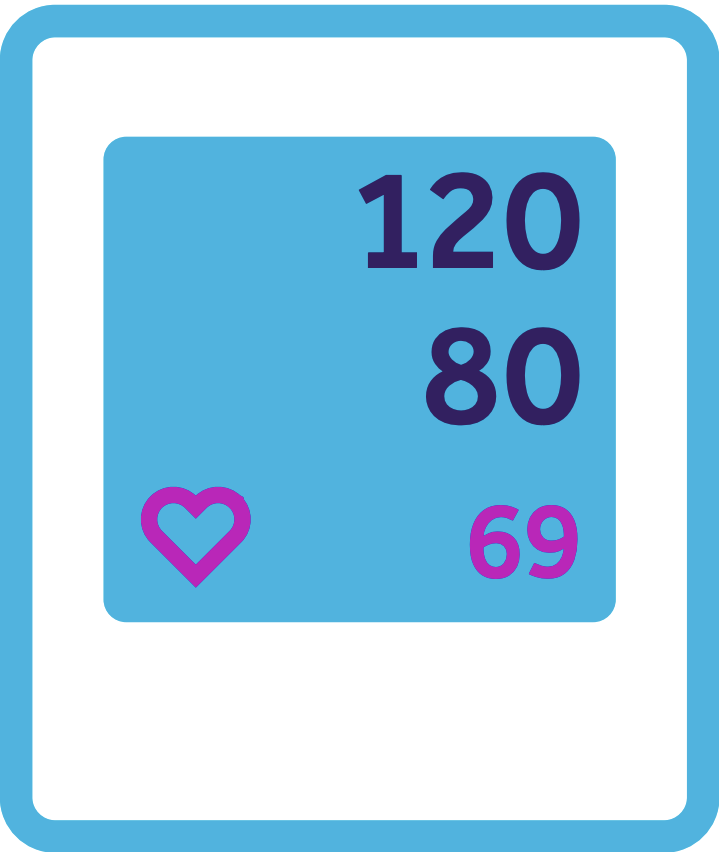
Systolic
(the top number)
how much pressure the blood is exerting against the artery walls when the heart beats.
Diastolic
(the bottom number)
how much pressure the blood is exerting against the artery walls when the heart is resting between beats.
Because pressure is greatest when blood is pumped out of the heart, your systolic number is higher than your diastolic number.
High blood pressure
(also called hypertension)
Occurs when blood pushes too hard against artery walls, causing damage to them. As the damage heals, it turns into scar tissue. The arteries become stiff and weak.

The American Heart Association (AHA) suggests a target of 120/80 mmHg.
For those with a history of high blood pressure, the AHA suggests a target of 130/80 mmHg.
Check your blood pressure regularly to better understand your patterns and trends and to see if changes to your lifestyle or medication are needed.
Was this article helpful?
In this article:
Sign up to unlock your health, your way at no cost to you.
This content is not intended to be a substitute for professional medical advice, diagnosis or treatment. Always seek the advice of your physician or other qualified health provider with any questions you may have regarding a medical condition.
You may not be eligible for all services. Log in to view the benefits included in your plan.