AI is quickly becoming part of the virtual care conversation. Hospitals and health systems are evaluating AI-enabled capabilities for documentation, patient monitoring, virtual nursing, virtual sitting, decision support, and operational workflows. The promise is significant: less manual effort, better prioritization, faster insight, and more support for care teams working under sustained pressure.
But AI will only create value if it is implemented in a way that reduces complexity. If introduced as another disconnected layer, AI can make an already fragmented environment even harder to manage. It can create new workflows, new oversight requirements, new data questions, and new sources of cognitive burden for clinicians. For health systems, the opportunity is not simply to adopt AI. It is to embed AI responsibly into the virtual care operating model.
AI should be a capability, not a standalone initiative
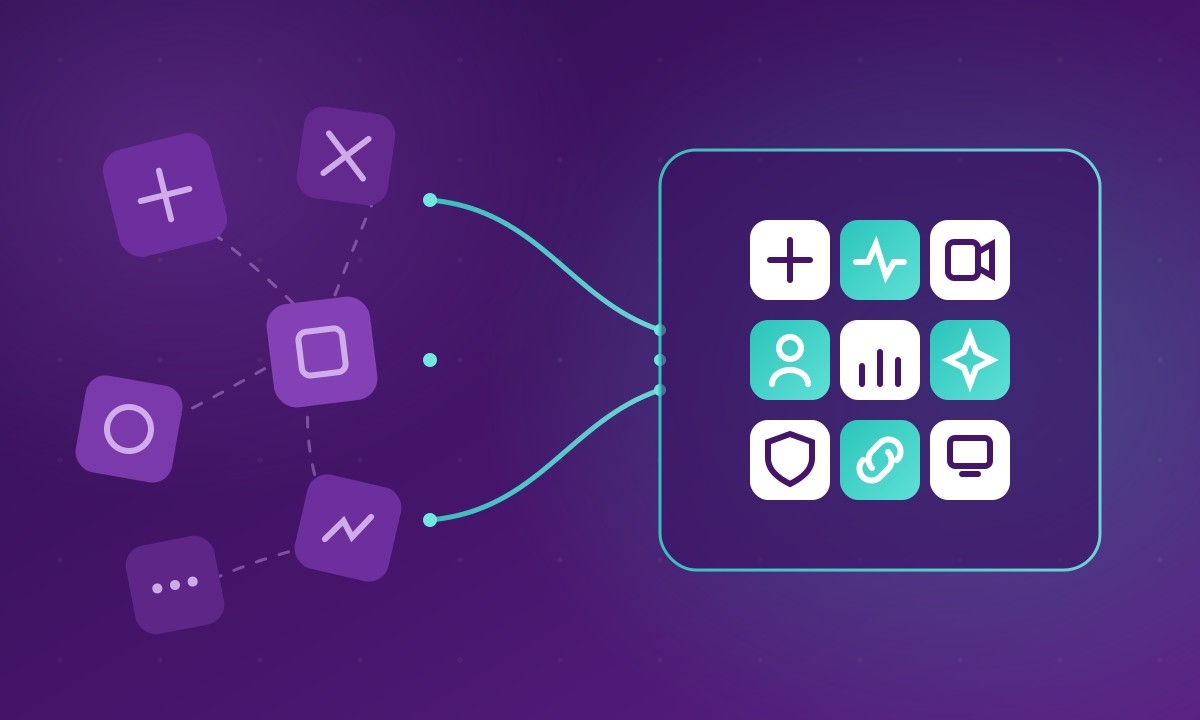
Many health systems are already managing fragmented virtual care environments. Different tools may support different departments, roles, or use cases. Workflows may vary across sites. Data may not flow consistently. Governance may be distributed or unclear.
Adding AI into that environment without a clear strategy can amplify the problem. An AI documentation tool may sit in one workflow. An AI monitoring capability may sit in another. A predictive analytics tool may require separate oversight. A virtual nursing enhancement may create a new process for bedside teams. Each individual solution may have value, but the combined effect can be more complexity. The better model is to treat AI as an embedded capability within virtual care.
That means AI should operate inside the workflows clinicians already use. It should support existing care team roles rather than forcing new handoffs. It should help teams prioritize information instead of overwhelming them with more alerts, dashboards, or screens. It should be governed as part of the enterprise care delivery strategy, not managed as a series of isolated pilots.
Start with readiness before use cases
Health systems often begin AI planning by asking which use cases to prioritize. That is an important question, but it may not be the first one.
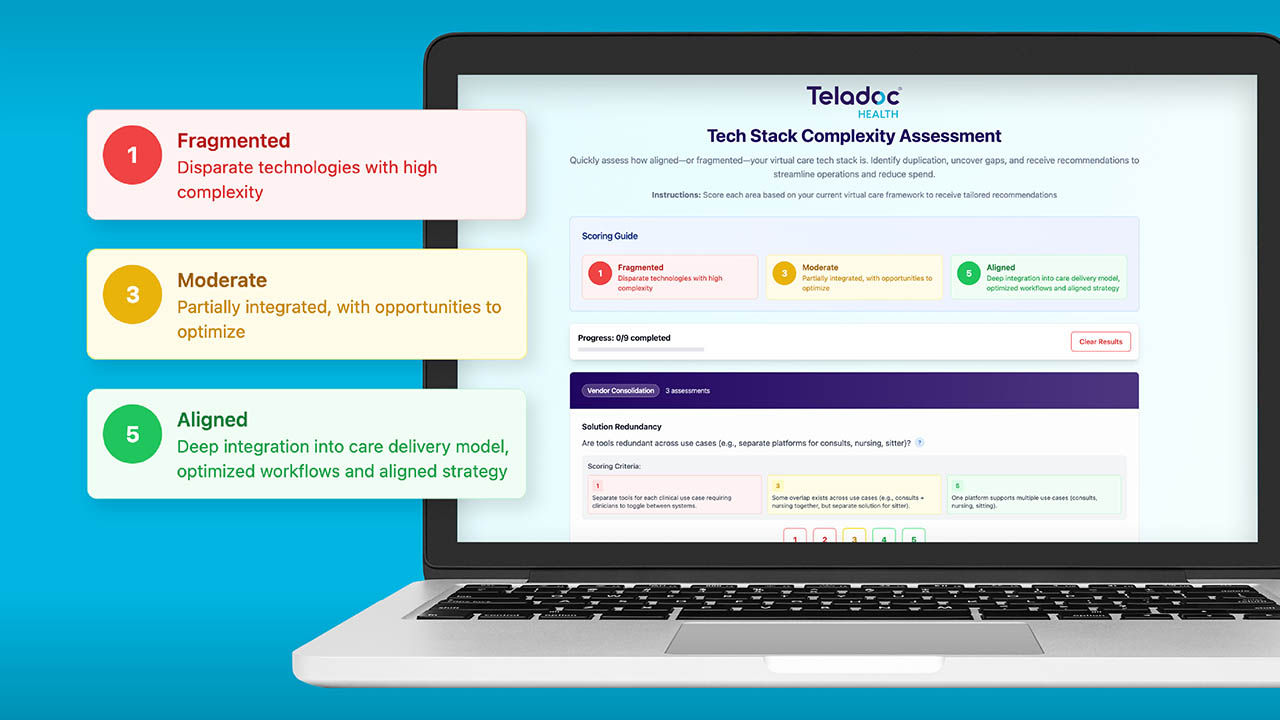
Before selecting use cases, leaders should assess readiness. Readiness includes the organization’s integration maturity, data flows, governance model, workflow consistency, clinical trust, and ability to measure outcomes. Without these foundations, even promising AI use cases can struggle to scale.
A readiness assessment should explore questions such as:
- Do current virtual care workflows produce usable, consistent data?
- Are virtual care tools integrated into the EHR and other core systems?
- Who owns AI decision-making across clinical, technical, operational, and compliance stakeholders?
- How will AI-enabled outputs be reviewed and trusted?
- How will the organization measure whether AI is improving care delivery?
- Can AI capabilities be extended across settings without creating separate workflows for every department?
These questions help leaders avoid the trap of adopting AI faster than the organization can manage it.
Governance is what allows AI to scale responsibly
AI governance is not just a compliance exercise. It is a scale enabler. Without governance, AI decisions may happen locally, inconsistently, or reactively. Individual teams may select tools based on immediate needs without considering enterprise implications. Standards for data use, model oversight, clinical validation, workflow design, and measurement may vary across the organization.
At small scale, that variation may be manageable. At enterprise scale, it becomes risk. Effective governance creates clarity. It defines who is involved in AI decisions, how use cases are prioritized, how performance is monitored, and how AI-enabled workflows are evaluated over time. It also helps organizations balance innovation with clinical trust and operational discipline.
This is especially important in virtual care because AI may influence documentation, monitoring, escalation, prioritization, and decision support. These are not abstract technical capabilities. They affect how care teams work.
The best AI use cases start with care team burden
AI should not be framed as a replacement for clinicians. In virtual care, its strongest role is often as a force multiplier.
AI can help reduce administrative work, surface meaningful insights, support documentation, assist with monitoring, and help teams prioritize where attention is needed most. The goal is to shift effort away from repetitive tasks and toward higher-value clinical judgment.
For example, AI-enabled virtual care may help care teams:
- Summarize relevant patient information
- Support documentation workflows
- Identify trends that warrant attention
- Prioritize monitoring activity
- Reduce unnecessary context switching
- Improve consistency across virtual care workflows
The common thread is burden reduction. If an AI use case requires clinicians to do more work, check another system, or manage another stream of information without clear value, adoption will suffer. If it fits naturally into existing workflows and helps teams focus, it is more likely to gain trust and scale.
AI value depends on the virtual care foundation beneath it
AI cannot solve fragmentation by itself. If virtual care programs are disconnected, AI-enabled capabilities may inherit those limitations. If workflows are inconsistent, AI outputs may be harder to standardize. If data is siloed, insights may be incomplete. If governance is unclear, adoption may move faster than trust.
That is why enterprise virtual care strategy matters. A strong virtual care foundation gives AI a place to operate. It creates the infrastructure, workflows, and governance needed to apply intelligence consistently across care settings. It also gives leaders a more practical way to sequence AI adoption: start with high-impact, low-disruption use cases; prove value; and scale deliberately.
The future is embedded, governed, and practical
The next phase of AI in healthcare will not be defined by experimentation alone. It will be defined by whether AI can be applied in practical, trusted, and scalable ways. For virtual care leaders, that means asking not only what AI can do, but where it belongs in the operating model.
AI should not sit beside care delivery. It should support care delivery from within. When embedded thoughtfully, AI can help reduce complexity, support clinicians, and extend the value of virtual care. When added without a strategy, it risks becoming another disconnected tool in an already crowded environment. The difference comes down to readiness, governance, workflow integration, and enterprise design.
Ready to evaluate your virtual care infrastructure? The Enterprise Virtual Care and AI Playbook includes practical frameworks for assessing your current infrastructure, identifying where fragmentation will limit future value, building the business case for platform consolidation, and designing a roadmap that creates compounding returns over time.