What five years of diabetes data reveal about long-term outcomes
Recent long-term trends show why it’s important to look beyond any single medication when evaluating diabetes support
Few areas of healthcare have changed as quickly as diabetes management. New medications, connected devices and evolving clinical guidelines have given people living with diabetes more options than ever to help control this disease.
With so many advancements occurring simultaneously, a more complicated question has to be asked: What is actually driving better health over time? A recent member analysis suggests the most lasting results come from pharmacotherapy, technology and lifestyle support working together.
At Teladoc Health, we looked at five years of data from more than 100,000 members with diabetes. The analysis includes members with type 1 and type 2 diabetes and looks at estimated A1c measures from 2021 to 2025.
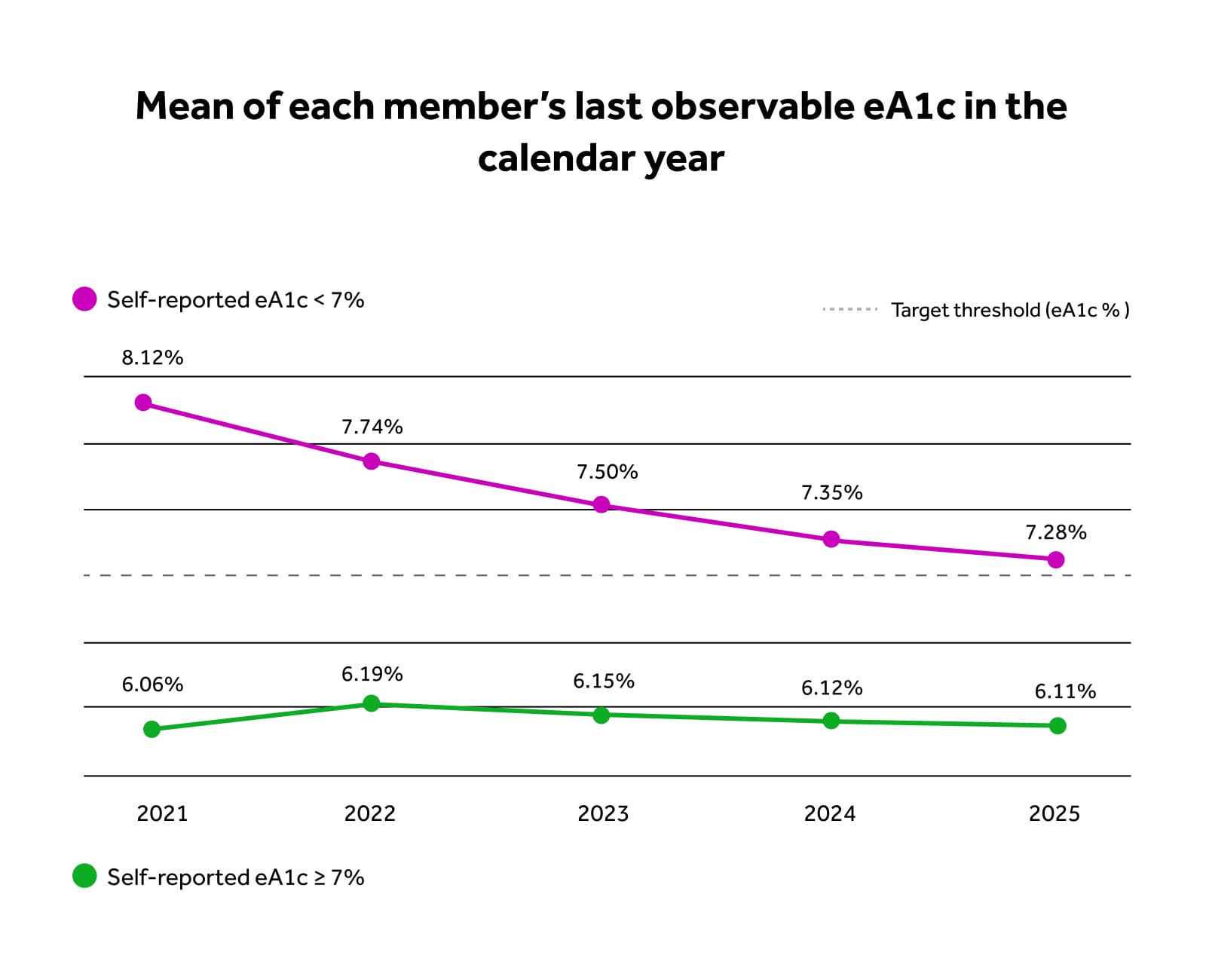
What initially caught our attention was simple: Members showed sustained improvement over time. Among members who started above the target threshold of estimated A1c 7%, the member’s average estimated A1c dropped from 8.1% to 7.2%. For members who started below 7%, they remained relatively stable and within the target range.
Diabetes medication matters, but it may not tell the whole story
During the five-year period we studied, the diabetes treatment landscape changed considerably. Our analysis shows growing adoption of newer drug classes that provide more heart and kidney protection to those with a history of diabetes, including GLP-1 receptor agonists and SGLT-2 inhibitors, as these drugs became first-line therapy.
That makes medication use important context when we look at changing estimated A1c levels, but the data suggests a more nuanced story.
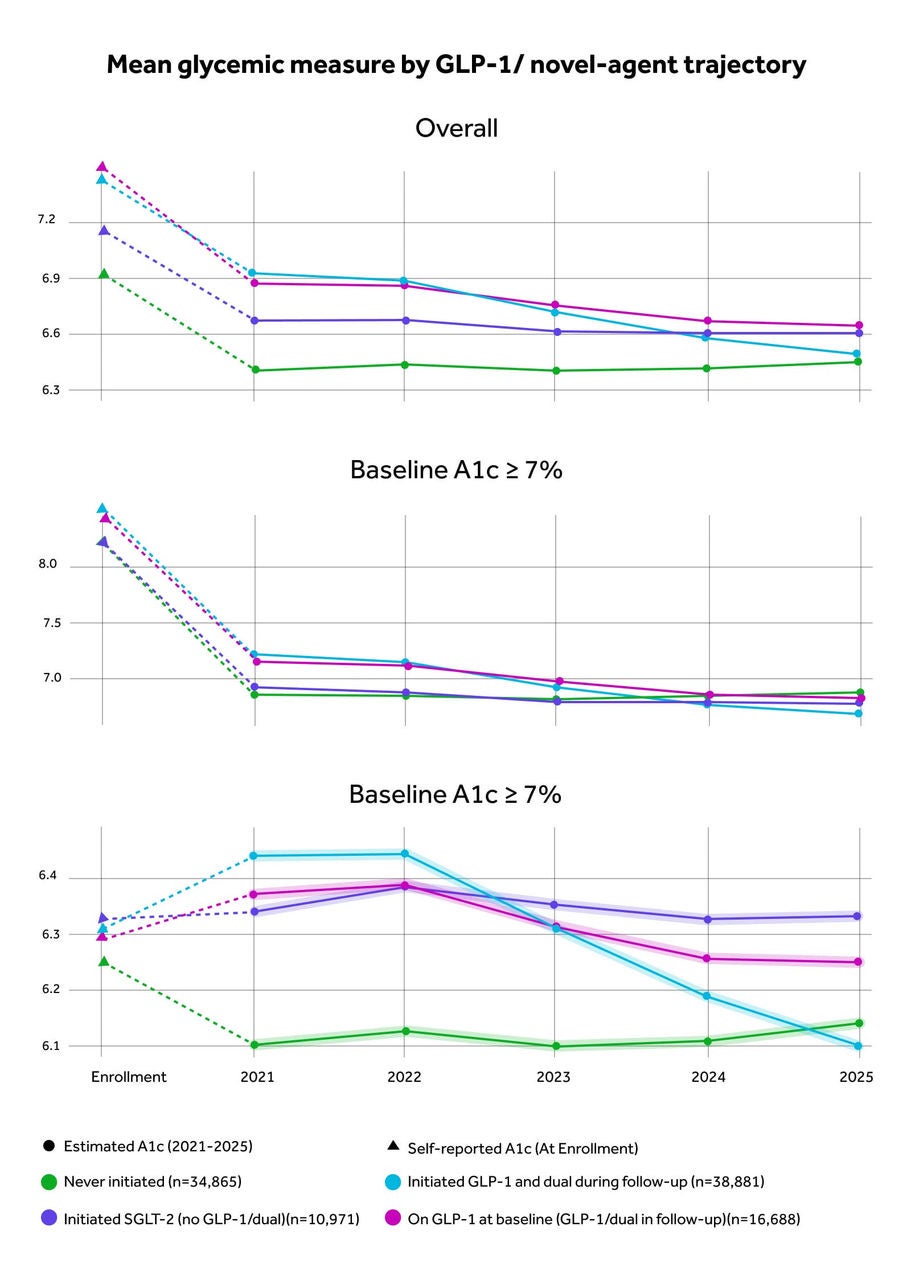
When members were grouped according to their treatment, people who never initiated a GLP-1 or SGLT-2 over the course of five years still saw glycemic improvement. This is particularly notable among members who entered with a self-reported A1c of 7% or higher. Members with no observable start of either medication still saw an approximately 1% reduction in estimated A1c the first year that they maintained for the entirety of our analysis.
That's an important distinction. It would be tempting to look at improving trends in this population’s glucose levels and assume that it can be explained by the adoption of new, effective medications. Since we are only observing this group and this trend, we cannot determine cause and effect and should not describe the results in that way.
Instead, the findings give us a reason to look deeper.
Why does long-term data matter in diabetes care?
When evaluating diabetes strategies, medication use is only one part of the picture. Long-term population health also depends on whether people stay engaged with their health and condition and whether improvements can be sustained. Longer monitoring periods can help answer that question.
A one-year snapshot can tell us whether an intervention coincides with change. A longer view can help reveal whether those gains persist as treatment patterns, member needs and the broader standard of care evolve.
It can also generate better questions. How much of the observed improvement is associated with changing medication use? What patterns emerge among people who never initiate newer agents? What role might engagement and medication adherence play?
The lesson is not to discount the extraordinary advances happening in diabetes treatment, but rather to widen the lens. New therapies are important to the evolving landscape of care, but understanding long-term diabetes improvement overall requires looking at the full member journey, over years rather than months.