For small employers, employee benefits have become a competitive advantage. They help employers recruit talent, retain valued employees and demonstrate that workforce health is a business priority.
Yet small employers are often asked to meet the same expectations as large organizations without the same scale, budgets, HR infrastructure or vendor-management resources. A 2024 analysis of U.S. Bureau of Labor Statistics data found that medical care benefits were available to 55% of workers at businesses with 50 or fewer full-time-equivalent employees, compared with 88% at businesses with 100 or more.
That gap is not only about whether benefits are offered. It is also about whether employees can understand, access and use them.
The benefits experience is becoming harder to navigate
Employers have added specialized point solutions for urgent care, mental health, chronic conditions, musculoskeletal (MSK) pain, second opinions and more. Many of these programs solve real problems. However, when they sit apart from one another, not in a connected, easy- to- navigate ecosystem, the experience can become fragmented.
Point solutions entered the market quickly across a wide range of health needs, adding complexity for plan sponsors. Fifty percent of organizations today offer access to between four and nine point solutions, with some reaching as many as 12. For small employers, that complexity can be especially difficult to absorb. Lean HR teams may not have the bandwidth or budgets to manage multiple vendors, promote each program effectively, or help employees determine where to start.
Employees need a clear front door to care
Employees do not think in benefit categories. They start with a need: a child’s fever, back pain, anxiety, a medication question or a concern about blood pressure.
These needs often map to some of the areas that drive the most day-to-day health care demand and cost, including primary care, mental health and urgent care (24/7 care). When those services are easier to access and better connected, employees are more likely to get timely support before issues become more complex or costly.
More than 100 million Americans have little to no access to primary care where they live, according to the Health Resources and Services Administration. Primary care matters because it serves as the foundation of the health care system, supporting continuous, person-centered and relationship-based care. Without it, minor health problems can progress and become chronic disease, care can become uncoordinated, emergency department visits can increase, preventive care can lag and spending can rise.
Additionally, primary care plays a meaningful role in both health outcomes and overall health care costs. Although it accounts for just 5% to 10% of total health care spend, it can influence much of the remaining 90% by helping guide earlier, more coordinated care.
Access remains a barrier
Many people still struggle to access primary care when and where they need it. One-third of Americans face barriers to accessing primary care. CDC data shows that 12.5% of U.S. adults delayed or did not receive medical care because they were too busy, while 10.6% could not find an available appointment when needed. The average wait for a physician visit is 31 days.
For small employers, these barriers can translate into missed work, delayed care and avoidable downstream costs. And access challenges are not limited to primary care. Employees may also face delays or friction when seeking mental health support, dermatology care or urgent care, making it harder to get the right help at the right moment.
This is where preventive screening and ongoing primary care can work together. New models are beginning to combine convenient access to care with proactive health assessments, helping identify risk earlier and connecting individuals to the appropriate next step before conditions progress.
Virtual primary care and preventive screenings can connect the experience
A better model gives employees a simple starting point, then guides them to the support they need: whether that is urgent care, preventive services, mental health support, chronic condition management, specialty referrals or an ongoing primary care relationship.
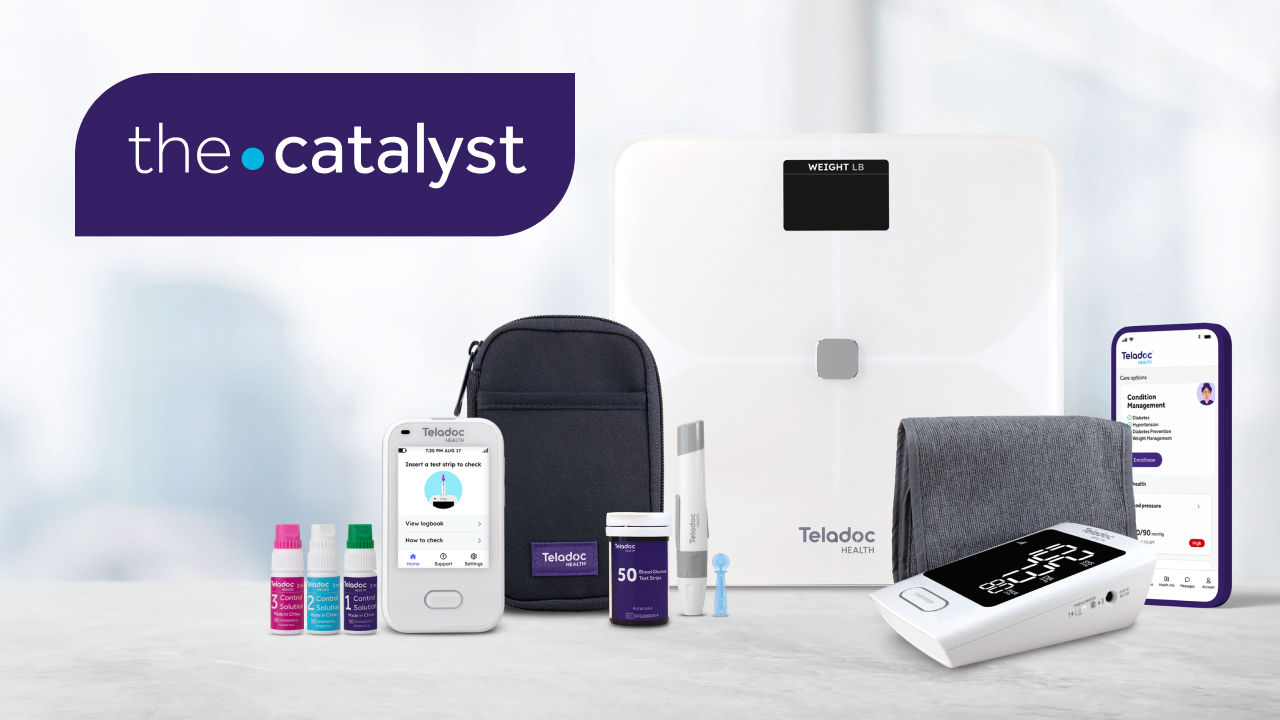
With the right clinical model, virtual primary care can support a more holistic view of the individual, enable data sharing, guide precision referrals, incorporate remote monitoring and create greater continuity across virtual and in-person care.
HealthiestYou by Teladoc Health is designed to be a simple entry point into care, while supporting a more connected experience that helps reduce friction, improve discovery and utilization of services, and connect individuals to a broader ecosystem of virtual care options with access to 24/7 Care, Mental Health, Dermatology, Digital Physical Therapy (MSK), Nutrition and Expert Medical Services. Dedicated client success support also helps employers drive awareness, education, engagement and ongoing value throughout the year.
Innovations like VirtualCheckup help identify health risks earlier and empower individuals to act before those risks become more serious health concerns. Combined with HealthiestYou, VirtualCheckup creates a powerful proactive care experience.
Together, virtual primary care, preventive screenings and intelligent care navigation represent an important evolution in benefits strategy: shifting from episodic care to a more coordinated model that enables earlier intervention, stronger engagement and a more seamless member experience.
This connected approach helps remove access barriers, reduce solution-point fatigue, and make it easier for individuals to find and engage with the right care.
Making better benefits more accessible
Results from HealthiestYou point to what a simpler, supported model can help achieve:
36% utilization in 24/7 Care for convenient, high-quality support for non-emergency health issues
14% utilization in Mental Health Complete for access to licensed mental health providers and digital tools
90% member satisfaction in virtual care services and a 95% resolution rate
For small business leaders, the opportunity is not simply to add more benefits. It is to create a benefits experience that helps employees get to the right care at the right time, more confidently and with the support they need to stay healthier over time. HealthiestYou helps make that possible.