
Diabetes explained: how type 1, type 2 and prediabetes compare

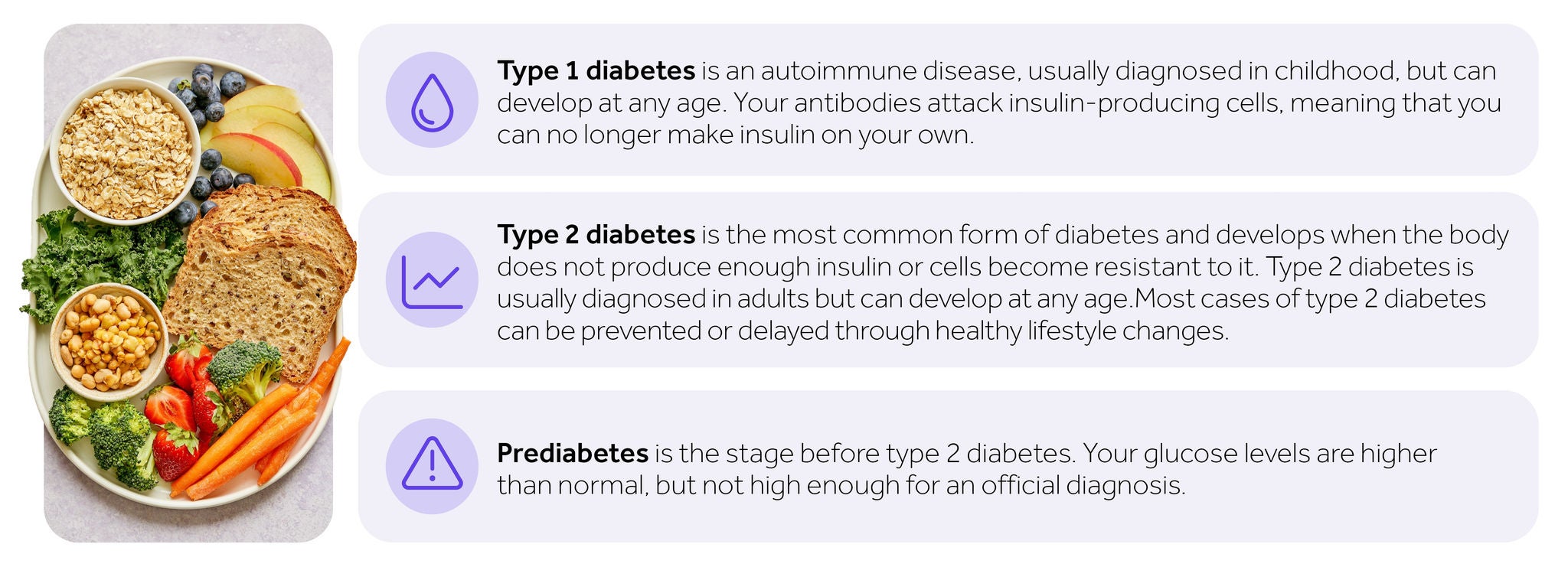
Diabetes—type 1 and type 2 diabetes and prediabetes—affects almost half the U.S. population. Over 40 million people have diabetes. An additional 115 million adults have prediabetes. What’s worse, about 11 million adults are living with this disease but are undiagnosed.
With numbers this large, it’s safe to say diabetes is something to be concerned about.
What is diabetes?
At its core, diabetes is a disease about blood sugar (glucose). Your body uses glucose (mainly from carbohydrates) as a quick source of energy when you eat or drink it. For glucose to be useful for your whole body, insulin gets involved. When you have diabetes, your pancreas doesn’t make enough insulin or does not respond to it properly. This raises the level of glucose in your bloodstream. Over time, high blood glucose levels can damage your kidneys, organs, heart and blood vessels, nerves, eyes and more.
What to look out for
The risk factors for type 2 diabetes and prediabetes include:
- A family history of type 2 diabetes
- Being overweight, especially in the mid-section
- Being over age 45
- Having high blood pressure
- Having elevated cholesterol
- Having had gestational diabetes
- Not being physically active
How can you prevent diabetes?
Type 2 diabetes and prediabetes can often be prevented or delayed by making healthy choices.
Maintain a healthy weight. If weight loss is recommended, losing just 5-7% of your current weight can help.
Eat balanced meals. Build your plate with 50% fruit and non-starchy veggies (like carrots, broccoli or kale), 25% lean protein (like chicken or fish), and 25% carbs (like whole grains, beans and legumes).
Stay active. Aim for 150 minutes of moderate activity a week. That’s just 30 minutes, 5 times a week.
Stand up. When sitting for long periods, stand up every 30-60 minutes and move around.
Manage stress. Try techniques like mindfulness, meditation and relaxation to help keep stress at a minimum.
Get your sleep. Aim for the recommended 7-9 hours of sleep a night.
These changes help the body’s cells use blood sugar better. And could help you reduce the risk of developing type 2 diabetes.
Sources
- Centers for Disease Control and Prevention. Diabetes data and research. CDC. Accessed August 26, 2026.
- Cleveland Clinic. Diabetes. Cleveland Clinic. Accessed August 26, 2026.
- Centers for Disease Control and Prevention. Prediabetes: Prevent Type 2 Diabetes. CDC. Accessed August 26, 2026.
- Teladoc Health. The Lowdown on Prediabetes. Teladoc Health. Accessed August 26, 2026.
- Teladoc Health. How to Recognize and Manage Diabetes. Teladoc Health. Accessed August 26, 2026.
Was this article helpful?
Sign up to unlock your health, your way at no cost to you.
This content is not intended to be a substitute for professional medical advice, diagnosis or treatment. Always seek the advice of your physician or other qualified health provider with any questions you may have regarding a medical condition.
You may not be eligible for all services. Log in to view the benefits included in your plan.