
Using a CGM for everyday wellness
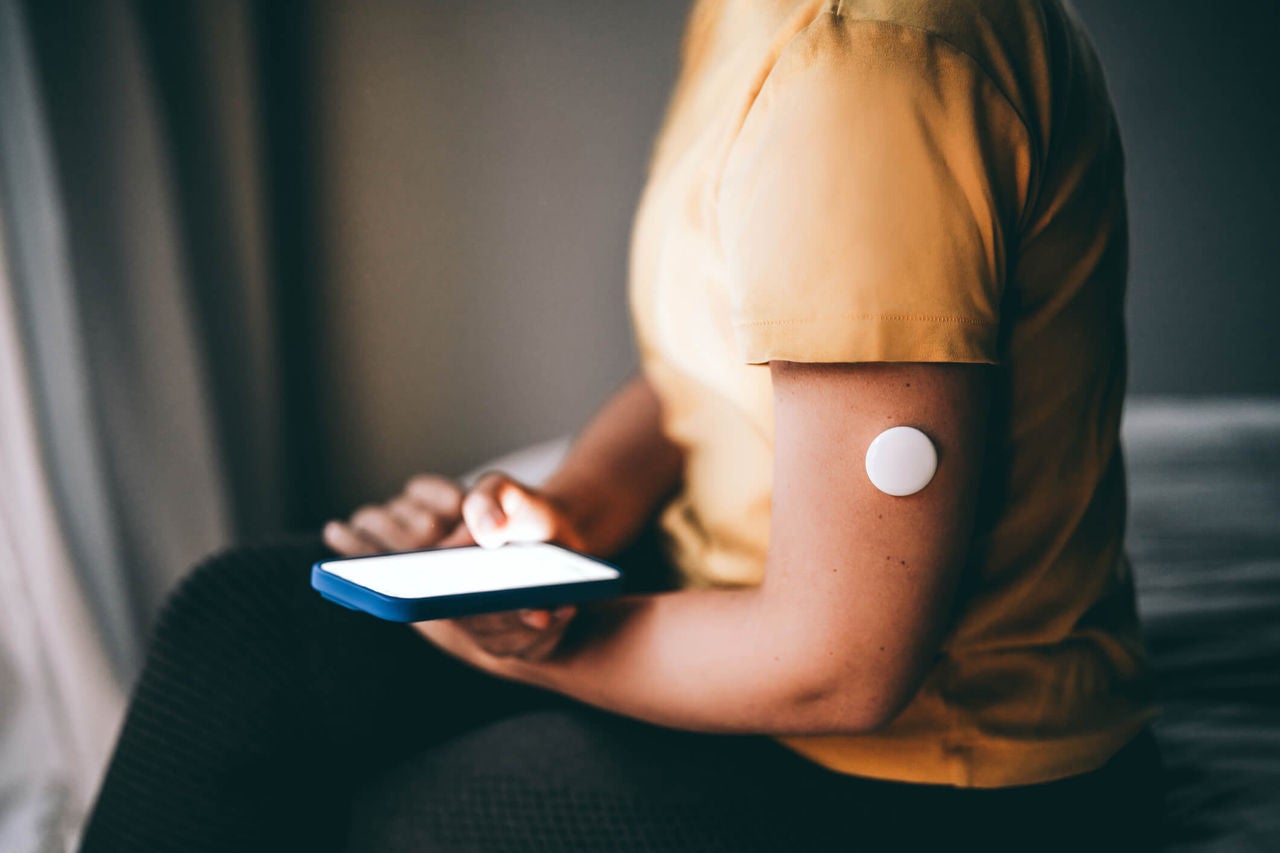
Many people think blood sugar tracking is only for those with diabetes. But that idea is quickly changing. More people without diabetes are starting to track their glucose to better understand their bodies.
You can now buy glucose monitors at the store or online—no prescription needed. There are even devices available that are designed specifically for people without diabetes. If you’re trying to feel more energized, improve your workouts or manage your weight, this kind of tracker may offer helpful insights.
Curious if a CGM is right for you? Let’s take a closer look at how these devices work and what they can teach you. Let’s figure out if one could help you reach your health goals.
But first, what is a CGM?
A continuous glucose monitor, or CGM, is a small patch you wear on your skin. Most people place it on their arm or belly. Inside the patch is a tiny sensor that checks your glucose all day.
Every few minutes, the sensor sends your glucose numbers to an app on your phone. You don’t have to prick your finger to see results! A CGM does not measure blood directly. It reads the amount of sugar in the fluid just under your skin. This still gives you a good picture of what your blood sugar is doing over time.
At first, CGMs were made for people with diabetes. Today, more people without diabetes are using them for everyday wellness. They want to learn how food, sleep, exercise and stress affect their bodies.
One important note: For people without diabetes, research is still catching up. A CGM can help you learn about patterns, but it is not a guarantee of better health on its own.
When a CGM might be helpful
A CGM isn’t for everyone. But it can help if you want to learn more about how your lifestyle habits (diet, exercise, etc.) affect your glucose levels. Here are some examples of when a CGM might help you reach your goals.
You want to understand how food affects your blood sugar
A CGM can show what happens after you eat. Some meals keep your glucose steady. Others make it rise fast and then drop.
People may respond differently to the same food. Your sleep, stress and activity can change your numbers too. So, it helps to look for patterns over a few days, not just one meal.
You may learn that eating carbs with protein or fiber helps keep your numbers more balanced. This can lead to meals that give you steady energy.
You’re sensitive to carbohydrates
Some people feel tired, shaky or cranky after eating certain amounts of bread, sweets or soda.
A CGM can help you see which foods cause quick spikes. But remember: A rise after eating is normal. The American Diabetes Association (ADA) recommends a target of less than 180 mg/dL 1 to 2 hours after a meal.
If you notice big swings, you can try smaller portions of carbs. You can also pair carbs with other foods like eggs, beans, yogurt or vegetables. Many people see a steadier rise when they add protein or fiber to the meal.
You need motivation to eat a healthier diet
Seeing your blood sugar change in real time can be eye-opening. Instead of guessing what is healthy, you can see how your body reacts. Some early research suggests CGM feedback works best when it is paired with coaching or a clear plan.
You’re trying to lose weight
Large swings in glucose levels can affect your hunger. Big rises are often followed by crashes. These crashes can make you feel hungry soon after eating.
A CGM can help you notice which meals cause your glucose to go up and down quickly. It can help you figure out which meals keep you full longer and which lead to cravings.
One thing to know: In people without diabetes, there is no strong proof that wearing a CGM alone leads to weight loss. Think of it as a tool that can help you learn what works for you.
You have prediabetes
If you have prediabetes, a CGM can be a learning tool. It can show how food, walking, sleep and stress affect your blood sugar. Some studies in people at high risk for type 2 diabetes found that CGM plus app-based coaching can improve blood sugar patterns.
This information can help you and your healthcare provider make healthy changes.
What to know before using a CGM
Before trying a CGM, it helps to understand its limits and how to use it safely.
It is not a medical diagnosis. A CGM does not tell you if you have diabetes. If your numbers seem high or unusual, talk to your care provider.
It is not perfect. CGMs measure sugar in fluid under the skin, not directly in the blood. Because of that, the number can lag a few minutes behind—often about 5 to 10 minutes, especially after eating or exercise.
Look for patterns, not one “bad” number. One high reading can happen for many reasons. Illness, stress, poor sleep and hard workouts can impact your glucose.
All foods can fit. A CGM should not be used to label foods as “good” or “bad.” Many foods raise blood sugar, and that is normal. The goal is to learn balance, not to avoid carbs or foods you enjoy forever.
Keep an eye on your mental health. For some people, knowing every number can cause stress or fear around eating. If you feel anxious, guilty or obsessed with food because of the data, take a break. A CGM should help you, not hurt your mental health.
Talk with a healthcare provider first (or soon after). A doctor or dietitian can help you understand what your numbers mean. They can also help you use the data in a healthy way. This is especially true if you have prediabetes or take medicines that affect blood sugar.
Cost matters. CGMs can be expensive. Insurance may not cover the cost if you do not have diabetes. Make sure you are aware of the price before starting.
Avoid “no-needle” glucose gadgets. If a watch or ring says it measures glucose without a sensor under your skin, be careful. These products may not be accurate.
The takeaway
A CGM is a small wearable device that shows how your blood sugar changes all day long. While it was first made for people with diabetes, many people now use it to learn more about their bodies and daily habits.
For some, a CGM can help with food choices, weight goals or managing prediabetes. For others, it may cause stress around eating, and it can be expensive.
If you try one, think of it as a short-term learning tool—not a rulebook. Used the right way, a CGM can help you make choices that support everyday wellness.
Sources
1. Klonoff DC, Nguyen KT, Xu NY, Gutierrez A, Espinoza JC, Vidmar AP. Use of continuous glucose monitors by people without diabetes: an idea whose time has come? J Diabetes Sci Technol. 2023;17(6):1686-1697. doi:10.1177/19322968221110830
2. Diabetes Research Connection. 42 factors that affect blood glucose.
3. American Diabetes Association. Continuous glucose monitoring (CGM).
4. Kitazawa M, Takeda Y, Hatta M, et al. Lifestyle intervention with smartphone app and iscgm for people at high risk of type 2 diabetes: randomized trial. J Clin Endocrinol Metab. 2024;109(4):1060-1070. doi:10.1210/clinem/dgad639
5. Guess N. The growing use of continuous glucose monitors in people without diabetes: an evidence‐free zone. Practical Diabetes. 2023;40(5):19. doi:10.1002/pdi.2475
6. Martens TW, Simonson GD, Bergenstal RM. Using continuous glucose monitoring data in daily clinical practice. CCJM. 2024;91(10):611-620. doi:10.3949/ccjm.91a.23090
Was this article helpful?
Sign up to unlock your health, your way at no cost to you.
This content is not intended to be a substitute for professional medical advice, diagnosis or treatment. Always seek the advice of your physician or other qualified health provider with any questions you may have regarding a medical condition.
You may not be eligible for all services. Log in to view the benefits included in your plan.