
The importance of strength-based exercise
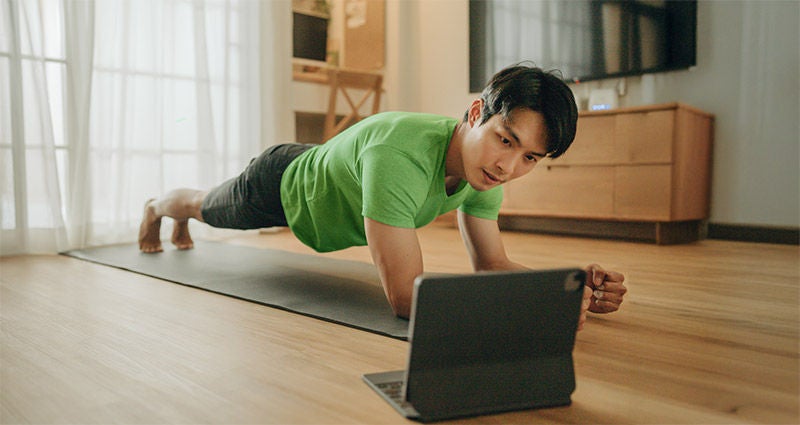
Physical activity is one of the five pillars of being healthy. Along with eating well, getting enough sleep, managing stress, not smoking and checking in with your mental health, regular exercise will keep your body functioning properly.
It takes a time commitment—at least 150 minutes a week of aerobic activity. That’s just 30 minutes, five times each week.
Aerobic activity is excellent for your body. Go the extra mile by adding exercises that are strength-based and specifically targeted to building muscle.
Why build muscle?
As we age, women and men naturally lose strength, stability and bone density. Bone thinning can lead to osteopenia and osteoporosis. At the same time, we also lose muscle mass. This condition, called sarcopenia, coupled with osteoporosis, can leave you frail, more likely to fall and to break a bone.
Regular weight-bearing and resistance exercise can help slow nature. It can also help you protect your body and balance to avoid falls and fractures in the future.
Support your body’s needs
Eating a high-protein diet is all the rage these days. But drinking protein shakes and eating giant beef burgers does not guarantee you will gain muscle. Building muscle and bone density happens when there is adequate nutrition to support it. Eating a balanced diet full of calcium, vitamin D and protein is the goal.
Average adults should eat 0.36 grams of protein for every pound they weigh.
A person who weighs 180 pounds needs around 65 grams of protein daily to meet basic nutritional requirements. (It could be more or less depending on age, weight, medical conditions and how active you are.) There are online calculators that can help you figure out how much protein you should eat to maintain and gain muscle.
How to get started
To preserve and build muscle, you need to stimulate it through weight-bearing and resistance exercises.
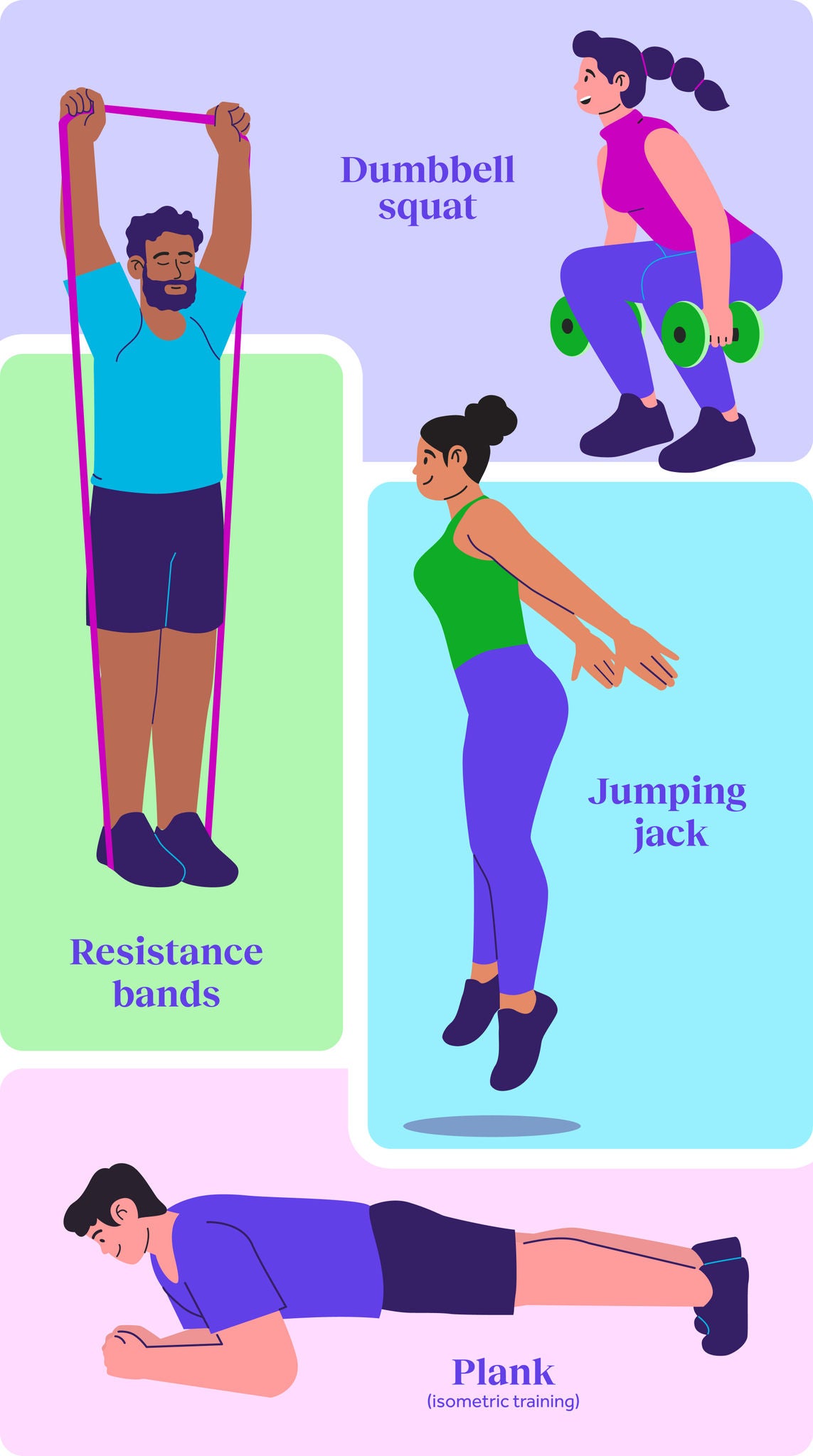
Use resistance bands, dumbbells, exercise machines or your own body weight to start a practice that incorporates all your major muscle groups. That means the quads (front of thighs), glutes (buttocks and hips), hamstrings (back of thighs), chest, back and core (abdomen).
If that sounds overwhelming, focus on two simple options: plyometric and isometric training.
Plyometric training, i.e., jumping, places healthy stress on your bones, stimulating cell growth and improving density. It also strengthens the muscles used to generate power. Start with one or two sets of 5-10 hops, once a week. Gradually increase repetitions, sets and frequency. Over time, you’ll notice gains in strength, height and agility—making movements like skipping or jumping jacks feel easier.
Planks, or isometric training, offer similar benefits. This push‑up position strengthens your core, stabilizes your back and engages your glutes, hips and arms. It works nearly every muscle from head to toe. Try short sets of 10–30 seconds daily. Within a month, you’ll feel stronger.
Better, without bulk
The goal is not to be a body builder. When building muscle for health, you’ll feel it in how your clothes fit (better), how you sleep (better) and how you may now indulge in a treat without paying the price (muscle, even at rest, burns more calories than other tissue). As you get older, strength training will provide the most important benefits: maintaining balance, posture and the ability to be independent.
Sources
Before starting any new exercise routine, talk to your healthcare provider to make sure it’s safe.
- American Heart Association. American Heart Association recommendations for physical activity in adults. American Heart Association. Accessed April 14, 2026.
- American Academy of Orthopaedic Surgeons. Exercise and bone health. OrthoInfo. Accessed April 14, 2026.
- Mayo Clinic Health System. Are you getting too much protein? Mayo Clinic Health System. Accessed April 14, 2026.
- Harvard Health Publishing. How much protein do you need every day? Harvard Health. Accessed April 14, 2026.
- National Agricultural Library. DRI calculator for healthcare professionals. US Department of Agriculture. Accessed April 14, 2026.
- National Academy of Sports Medicine. Developing power in everyday athletes with plyometrics. NASM Blog. Accessed April 14, 2026.
- National Academy of Sports Medicine. Core stability exercises: targeting progressive core training. NASM Blog. Accessed April 14, 2026.
Was this article helpful?
Sign up to unlock your health, your way at no cost to you.
This content is not intended to be a substitute for professional medical advice, diagnosis or treatment. Always seek the advice of your physician or other qualified health provider with any questions you may have regarding a medical condition.
You may not be eligible for all services. Log in to view the benefits included in your plan.