
Fun ways to stay active as a family
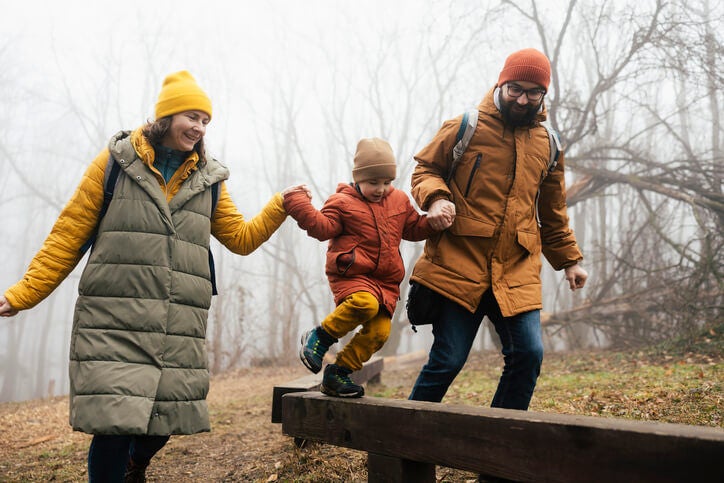
For many parents, exercise can feel like one more thing competing for time. But staying active doesn't have to mean stepping away from your family. Being active together is a great way to bond and have fun. You’ll also be modeling lifelong healthy habits. Use these strategies to meet your fitness goals and get your family moving:
1. Family hikes
Climb to new heights or explore a local park. Hiking tops the list of family-friendly activities. Fresh air and natural scenery help everyone reset. What’s more, walking works well for a wide range of ages and fitness levels.
If you’re hiking with babies and young kids, a hiking backpack can be key. Walking with extra weight turns any easy stroll into a cardio workout. Look for accessible paths or boardwalks that can handle strollers. Consider a jogging stroller for rougher terrain. If you’re lucky, your little one might nap while you’re getting your steps in.
Once kids can walk, engage them by turning the hike into a game. Ask them to spy different things along the route: Find a yellow bird. Spot an interesting insect. Who can see the first spring flowers?
Natural features like rocks or logs can provide climbing breaks. While they explore, you can sneak in a few moves like planks, push‑ups or step‑ups.
Tip: When hiking with kids, success isn’t about reaching the summit. Focus on how long you're out rather than how far you go.
2. Roller-skating, scootering or biking together
If you want to cover more distance, add some wheels. Scooters are a boon for walking parents. Kids can zip along while you walk or jog, extending how far everyone can go.
Biking is another fantastic family activity. Look for local bike paths or quiet streets for the safest rides. Bring the youngest family members along on a bike seat or trailer. Balance bikes help kids build confidence before they’re ready for pedals.
New riders often do well practicing on a driveway with a slight incline. This gives them momentum, but it feels manageable. As always, make sure everyone wears a properly fitted helmet. Review basic bike safety like hand signals before you hit the road.
Roller-skating and ice skating are other fun activities. Indoor and outdoor rinks make it easy to skate year‑round. Simple supports like milk crates can help beginners build confidence.
3. Backyard or park sports—basketball, soccer, frisbee, badminton
“Go play outside” is good advice for the whole family too.
Head to the backyard or a nearby park. An impromptu game of basketball, soccer, frisbee or badminton will make it fun for all. Even a simple game of tag gets everyone running and laughing.
At the playground, you can stay active while supervising. You can do step-ups, push-ups, lunges or jumping jacks while the kids play.
4. Living room dance party, fitness video games or workout videos
Sometimes a low-key day at home is exactly what everyone needs. Even indoor bursts of activity can add up—and be super-fun.
Blast some tunes and have a dance party (or play freeze dance!)
Play motion‑based video games that turn screen time into full-body movement
Inflate a balloon and try to keep it from touching the ground (keepie uppie)
Create a quick obstacle course with pillows, chairs and tape on the floor. Crawl, hop, balance, repeat.
Play Simon Says with movement (jumping jacks, crab walks, wall push‑ups)
If you want to do your own workout, you might find your kids joining in. They may be enthusiastic workout partners or volunteer free weights. Kids love to treat an exercising parent like an open jungle gym.
5. Turn daily routines into movement
Don’t overlook the most reliable routine of all: everyday life. Small choices can make a big difference when they add up.
Here are some ideas to include more activity for the whole family:
Walk or bike to school or nearby errands when possible
Get off the bus or subway one stop early and walk the rest of the way
Involve kids in active chores, like vacuuming, raking leaves or weeding the garden
Remember, the goal for everyone is simply to move more. It’s great to find time for yourself. However, adapting your fitness to fit family life has other benefits. Being active together is fun for everyone. It also teaches your children that movement is a natural part of daily life. That’s a habit, and a gift, that can last a lifetime.
Was this article helpful?
Sign up to unlock your health, your way at no cost to you.
This content is not intended to be a substitute for professional medical advice, diagnosis or treatment. Always seek the advice of your physician or other qualified health provider with any questions you may have regarding a medical condition.
You may not be eligible for all services. Log in to view the benefits included in your plan.