


Your guide to A1c

Your guide to A1c

Your A1c is an average of your blood sugar readings over a period of time. But do you need an A1c test? Learn exactly what this test is, how it's measured, and what a healthy A1c reading looks like. Get your questions answered with this helpful guide.

What is an A1C test?

It’s a blood test that measures your average blood sugar level over a span of 2-3 months and is used to screen and diagnose prediabetes and diabetes. Your doctor may also do an A1C test to help make diabetes treatment decisions.

Your A1C value

Is a percentage that reflects your average blood sugar over the past 2-3 months. The higher it is, the higher your blood sugar levels have been.

Long term

What is the suggested target for an A1C?

The American Diabetes Association (ADA) suggests a target A1C value of 6.9% or lower for most people with diabetes. Your doctor might recommend a different target depending on your specific blood sugar goals and treatment plan.
A1C Target or lower

How blood sugar readings compare to A1C results

eAG (mg/dL)

Estimated Average Glucose

A1C (%)
1266.0
1406.5
1547.0
1697.5
1838.0
1978.5
2129.0
2269.5
24010.0

How the A1C test complements your blood sugar checks

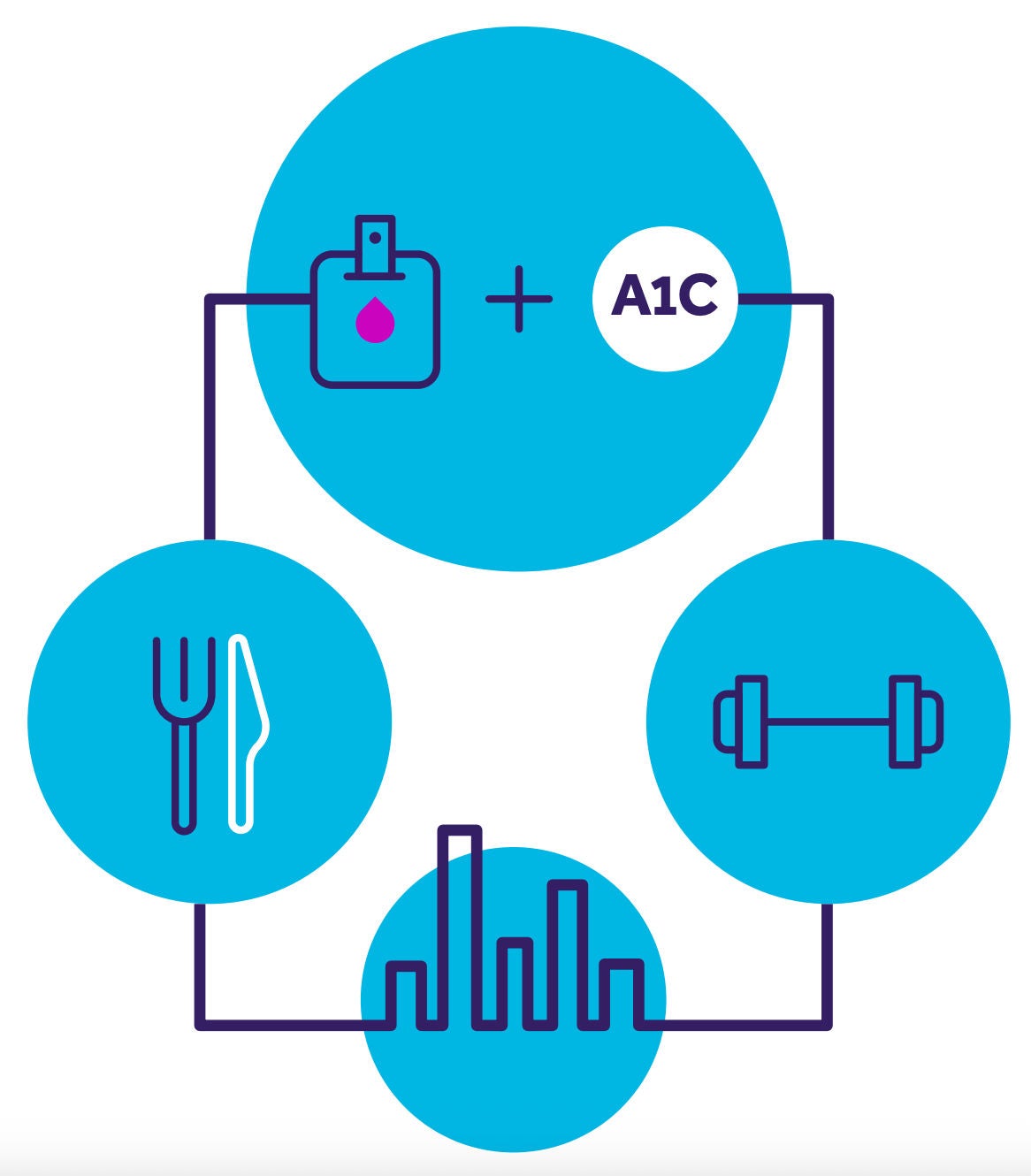
Daily blood sugar monitoring helps you know how things like food and exercise are affecting your levels so you can make changes to improve your health. An A1C test provides you with a picture of how those changes are working for you over the long term. 

How often should you get an A1C test?

At least twice a year, although your doctor may recommend getting the lab test done every 3 months if:

Your blood sugar levels are not at your goal

You’re newly diagnosed with diabetes

There’s a change in your diabetes plan

(e.g., new medication or dose)

Top 5 things you can do to improve your A1C numbers

Eat a healthy diet

Eat less sugar and refined carbs, and more fiber, healthy fats, and non-starchy veggies.

Stay active

Start with at least 5,000 steps per day and increase it gradually.

Reduce stress

Spend 5-10 minutes every day journaling your mood or practicing mindfulness.

Get ZZZ's

Try to get 7-8 hours a night and keep electronics out of your bedroom.

Take your meds as prescribed

Stick with the exact amount at the times your doctor instructed.

If you have questions about your fasting blood sugar, contact your coach or doctor.

In this article:

Was this article helpful?

Be the first to find this article helpful

0 people found this article helpful

This content is not intended to be a substitute for professional medical advice, diagnosis or treatment. Always seek the advice of your physician or other qualified health provider with any questions you may have regarding a medical condition.

You may not be eligible for all services. Log in to view the benefits included in your plan.