
Flex your brain with games

We all know those kinds of people. They’re slightly obsessed: They can’t start or finish their day without completing their daily puzzle.
You wonder what all the hubbub is about. They’re just puzzles. Words, numbers, letters and combinations. But is there more to it? Yes.
This daily stimulation helps maintain flexibility in your brain. And like any exercise, the more you use a part of your body, the less likely it is to atrophy. The old adage “Use it or lose it” is true, particularly as we age.
Your brain ages too
As a person gets older, change occurs from head to toe. In the brain specifically, some changes could include:1
- Brain shrinkage, including those areas involved with learning and complex mental activities
- Less effective communication between neurons
- Decreased blood flow
- Increased inflammation
However, the brain can still change and adapt, allowing people to master new challenges and tasks as they age.1
Increase mental stimulation
Mentally stimulating activities create new connections between nerve cells.2 They may even help the brain generate new cells. In addition, activities requiring manual dexterity like drawing, painting, needlework and crafting do the same thing.
Game for games?
There are activity books filled with word and number puzzles. Many newspapers and websites offer exclusive puzzles, many of which are available online for free. Here are a few for your consideration:
- Crosswords and word search puzzles can be found everywhere.
- Wordle gives you six chances to guess a five-letter word. There are also variations with three-, four- and six-letter words or more. 3
- Checkers or chess are games that can be played in person with a friend or even online.
- Sudoku requires that you fill a nine-by-nine grid with numbers on each line without repetition.4
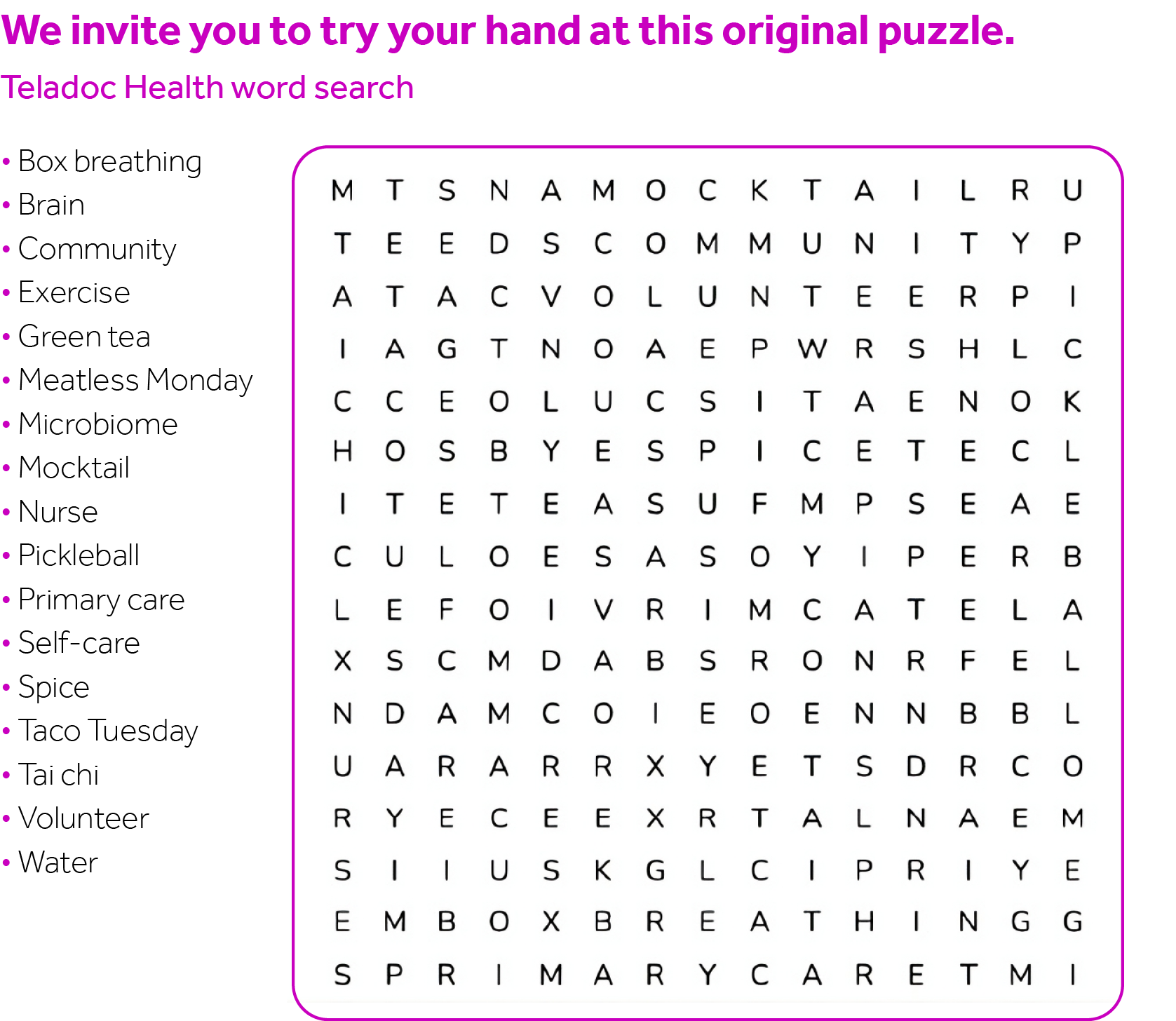
Give your brain a workout. It only takes a few minutes each day to keep it in shape.
1https://www.nia.nih.gov/health/brain-health/how-aging-brain-affects-thinking
2https://www.health.harvard.edu/mind-and-mood/12-ways-to-keep-your-brain-young
3https://www.nytimes.com/2022/02/10/crosswords/best-wordle-tips.html
4https://www.nytimes.com/2023/03/02/crosswords/how-to-solve-sudoku.html
Was this article helpful?
Sign up to unlock your health, your way at no cost to you.
This content is not intended to be a substitute for professional medical advice, diagnosis or treatment. Always seek the advice of your physician or other qualified health provider with any questions you may have regarding a medical condition.
You may not be eligible for all services. Log in to view the benefits included in your plan.