
The four pillars of being healthy

Wanting to live your best life is a sentiment shared by many.
And we all have a “why”—family, travel, pursuing a passion project. You may simply want the freedom to go where you want, whenever you want. In all these cases, your health is integral to getting you there.
Good health is not something that happens by accident. The lifestyle choices you make can heavily influence the way your body operates. There are unfortunate situations when you are diagnosed with something that’s not directly preventable. However, with a healthy baseline, you could face a better prognosis.
But what can we do to be healthier, age better and lower our risk of serious conditions? It all comes down to eating, sleeping, exercising and checking in on your mental health.
Fuel your body with balanced nutrition
Eating simple, clean meals made with a variety of nutrient-dense whole foods is the easiest approach to take. Healthy, balanced diets include:1
- Vegetables
- Fruits
- Whole grains
- Fat-free and low-fat dairy products
- Proteins, including lean meats, eggs, seafood, legumes, nuts and seeds
- Healthy fats
Highly processed foods and beverages should be limited. If you’re not sure something is processed, read the nutrition facts and ingredient list. If there are added sugars, salt, coloring, flavoring or trans fats, look for something else with fewer ingredients.2
Get the rest you need
Everyone knows someone who skimps on sleep for fun, travel or even video games. Then they say, “I can sleep when I’m dead,” to rationalize it. The reality is that they could be putting themselves at risk for poor health, weight gain, type 2 diabetes and more.3
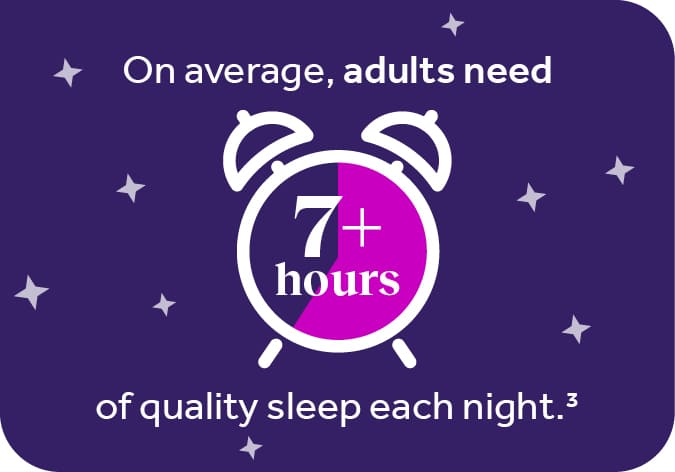
During sleep, your brain and body processes slow down to allow for mental and physical recovery.4 If you cannot break poor sleep habits on your own, seek help from a medical expert.
Exercise regularly
Our bodies are built to move. However, most people spend more than half their waking time parked on a chair or a sofa.5 Sedentary behavior can lead to increased risk for type 2 diabetes and heart disease.5 The easiest way to combat these issues? Get up and move. Take a quick walk. Do five to 10 squats or leg lifts. Swing your arms around like a windmill. Move at least once an hour. It all adds up.
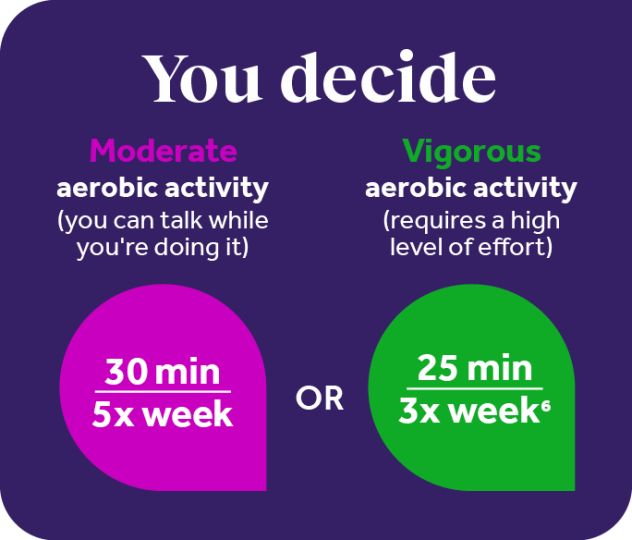
Not only will your body thank you, but you’ll improve your brain and mental health.
Before starting any new exercise routine, talk to your doctor to make sure it’s safe.
How are you?
It’s a simple question we hear multiple times each day. Rather than treat it as a throwaway remark, think about it as the centerpiece of a daily mental health check-in.
Mental health is an integral part of your makeup—it’s always affecting you. Are you feeling stressed? Anxious? Happy? Content? These are all examples of your mental health at work.
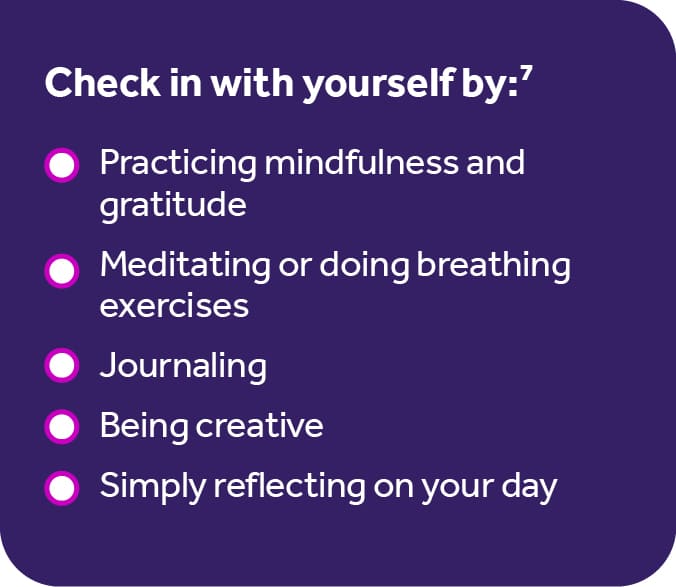
And if you need support, find a therapist or a support group to talk to.
Take these basics, make them your own and share them with your loved ones. Community is important to your health too.
Sources
1. U.S. Departments of Agriculture & Health and Human Services. Dietary Guidelines for Americans 2020–2025 Executive Summary. Washington, DC: U.S. Government.2. Harvard Health Publishing. The best ways to identify processed foods. Boston, MA: Harvard Medical School.3. Centers for Disease Control and Prevention (CDC). About Sleep. Atlanta, GA: U.S. Department of Health and Human Services.4. Sleep Foundation. What Happens When You Sleep? Washington, DC: Sleep Foundation.5. Harvard Health Publishing. Why you should move — even just a little — throughout the day. Boston, MA: Harvard Medical School.6. American Heart Association. Recommendations for Physical Activity in Adults. Dallas, TX: American Heart Association.
7. Be Well NY. Taking Care of Yourself. Albany, NY: New York State Office of Mental Health.
Was this article helpful?
Sign up to unlock your health, your way at no cost to you.
This content is not intended to be a substitute for professional medical advice, diagnosis or treatment. Always seek the advice of your physician or other qualified health provider with any questions you may have regarding a medical condition.
You may not be eligible for all services. Log in to view the benefits included in your plan.