
What is BIA, and how can it help you understand body composition?
Key points
- BIA estimates body fat, muscle mass and body water using a low electrical signal.
- Tracking BIA trends over time can help you understand changes in body composition.
- Keep body composition mode off if pregnant or using an implanted electronic device.
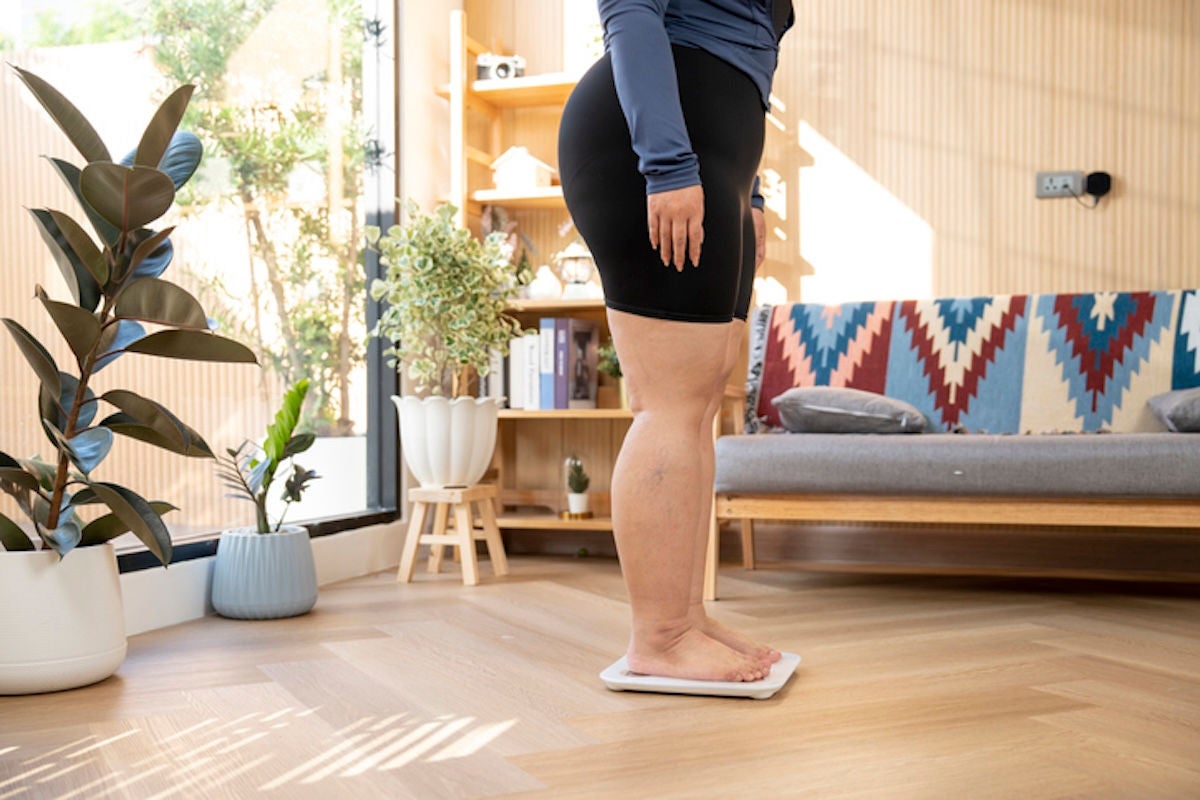
The Teladoc Health WM2000 weight scale measures more than weight. Body composition mode can estimate muscle mass and body fat percentage. To do this, the scale uses bioelectrical impedance analysis, or BIA. BIA is a quick and simple way to estimate what your body is made of. This is called body composition. Body composition includes things like fat, bone and muscle.
BIA works by sending a very low electrical signal through your body. You do not feel it, and it only takes a few seconds. The signal moves through some body tissues more easily than others. For example, muscles have more water, so the signal moves through it more easily. Fat slows the signal down.
A BIA device measures how much your body slows down the electrical signal. It also uses other information, like your height and sex, to estimate body fat and lean body mass.
When you use your connected scale for the first time, the app will ask if you want to turn on body composition mode. This setting lets the scale use BIA to estimate muscle mass and body fat percentage. These numbers can help you see changes in your body over time. You can turn body composition mode on in the Weight Management onboarding program or on the Settings page. You can also turn it off online or in the app at any time.
Most people can choose to turn it on. Body composition mode can give you helpful information about your health trends.
Some people should keep body composition mode off:
- People with an implanted electronic device, such as a pacemaker
- People who are pregnant
The maker of the Teladoc Health WM2000 weight scale has not tested or approved the scale for these groups. If you have already turned body composition mode on, you can turn it off at any time in the app settings.
Not sure if BIA is right for you? Talk to your healthcare provider. You can also learn more about the benefits of using body composition mode.
Want to understand your own health measurements?
Body impedance analysis, or BIA, can give you helpful information about body fat and muscle mass. Learning what these numbers mean can help you make informed choices about your health.
FAQs
Is BIA accurate?
BIA gives an estimate of body fat, muscle mass and body water. It is not as exact as some tests done in a clinic. But it can help you track changes over time. Your results may change based on how much water you have had, when you last ate and whether you recently exercised.
Can hydration affect BIA results?
Yes. BIA results can change based on how much water is in your body. For the best comparison, try to measure yourself under similar conditions each time.
What’s the difference between BMI and BIA?
BMI uses height and weight to estimate whether a person is in a certain weight range. BIA looks at more than weight. It estimates body fat percentage, muscle mass and body water.
Can BIA estimate body fat percentage?
Yes. BIA can estimate body fat percentage. It does not measure body fat directly, but it can help you see body changes over time.
Why might my BIA results change from day to day?
Your results may change from day to day because of water levels, meals, exercise and other factors. For this reason, it is usually better to look at trends over time instead of one day’s result.
Sources
- Teladoc Health. Teladoc Health WM2000 weight scale user manual. Accessed November 12, 2026. https://www.teladochealth.com/helpcenter/article/teladoc-health-wm2000-weight-scale-user-manual
- Khalil SF, Mohktar MS, Ibrahim F. The theory and fundamentals of bioimpedance analysis in clinical status monitoring and diagnosis of diseases. Sensors (Basel). 2014;14(6):10895-10928. doi:10.3390/s140610895. Accessed October 5, 2026.
- Harvard T.H. Chan School of Public Health. Body fat. The Nutrition Source. Accessed October 5, 2026.
- Kyle UG, Bosaeus I, De Lorenzo AD, et al. Bioelectrical impedance analysis, part I: review of principles and methods. Clin Nutr. 2004;23(5):1226-1243. doi:10.1016/j.clnu.2004.06.004. Accessed October 5, 2026.
Was this article helpful?
Sign up to unlock your health, your way at no cost to you.
This content is not intended to be a substitute for professional medical advice, diagnosis or treatment. Always seek the advice of your physician or other qualified health provider with any questions you may have regarding a medical condition.
You may not be eligible for all services. Log in to view the benefits included in your plan.