
The chew: Let’s talk about digestive and colon health

Why is poop such an awkward topic to discuss? Kids and tweens love to chatter on (and on) about it. The poop emoji is one of the most used icons ever and has made its way onto everything from stickers and T-shirts to bed linens. It makes perfect sense—we all do it.
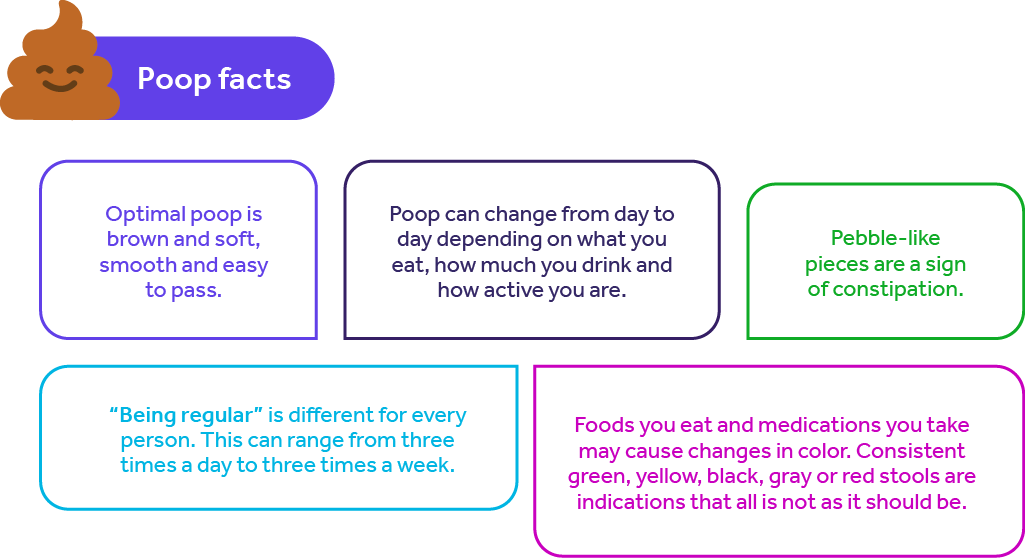
The amazing thing about poop is that it’s a window to your health and possible digestive issues. Texture, color, frequency and smell can provide clues to the health of your entire digestive system and even your overall health.
Healthy colon = healthy you
Observing your digestive health is important to your overall health. Colorectal cancer is one of the leading causes of cancer death in the U.S., but it doesn’t have to be. Regular colorectal cancer screening is one of the most powerful tools for preventing this type of cancer. And early detection offers more treatment options. It’s recommended that colon cancer screenings start at age 45 and continue at regular intervals based on individual risk factors.
There are several options when it comes to screenings:
- At-home tests where you collect samples and return them to a lab. These can be done on one- to three-year intervals.
- A flexible sigmoidoscopy checks for polyps or cancer inside the rectum and lower third of the colon. It is usually repeated every five years.
- A colonoscopy allows doctors to physically examine the entire colon and remove polyps and even some cancers. This exam is usually repeated every 10 years.
- A CT colonography is a virtual examination of the colon using X-rays and computers. This is usually repeated every five years.
Earlier testing or repeat testing at shorter intervals may be warranted if you suffer from things like inflammatory bowel disease or have a family history of polyps or colorectal cancer. Your doctor can guide you through which test is best for you.
Fiber is your friend
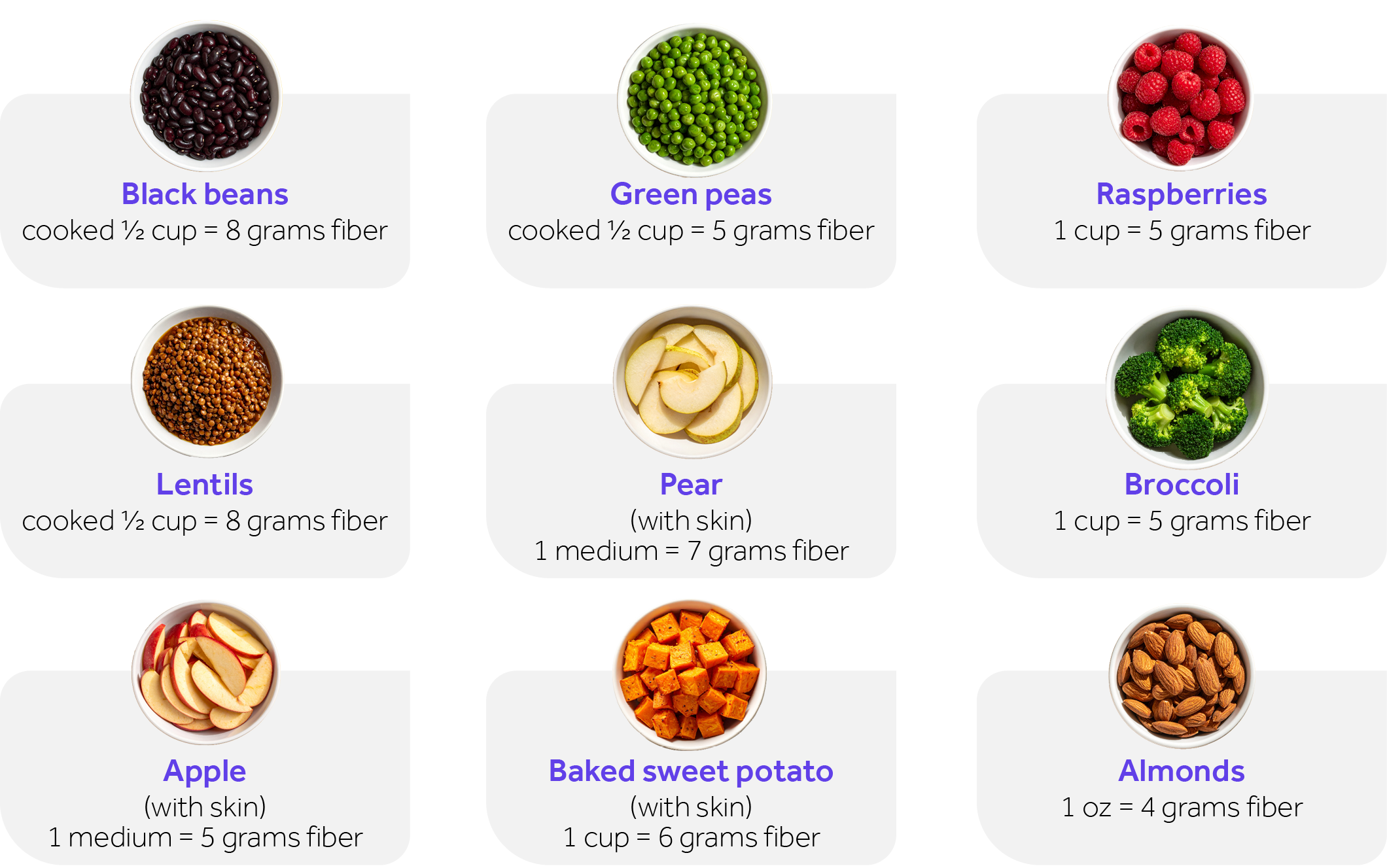
One of the keys to keeping your digestive system moving is eating the right foods. It’s recommended that we eat between 25 and 35 grams of fiber each day. Balanced nutrition that includes fruits and vegetables is your best chance at hitting those numbers. Adding high fiber grains and legumes is also an excellent choice.
Consider these to help get your daily dose:
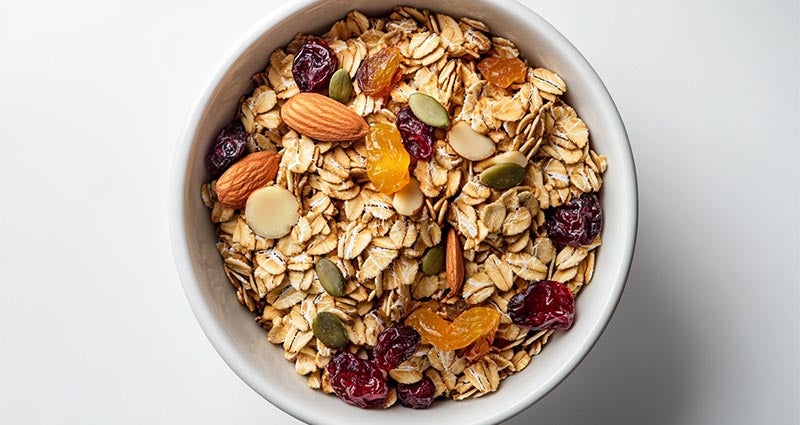
It’s not hard to reach your daily fiber goals when you pair delicious fruits and grains. This quick and easy recipe can be eaten as a breakfast cereal or used to top a low-fat protein like yogurt, silken tofu or cottage cheese.
Cook mode (prevents screen from going to sleep)
Ingredients
This link exits Teladoc Health's website. Instacart has its own privacy policies and terms.
Preparation
- Preheat oven to 350°F.
- Spread oats and wheat bran on a large baking sheet. Toast for 10 minutes, stirring occasionally to avoid burning.
- Add almonds, pumpkin seeds and coconut to oat mixture. Stir, spreading on the baking sheet. Toast for an additional 7 to 10 minutes, stirring occasionally, until slightly browned. Remove from oven and allow to cool.
- Transfer the oat mixture to a large bowl. Add cranberries and apricots and if desired, flaxseed; mix.
- Heat honey in a microwave-safe bowl for about 15 seconds. Add vanilla, cinnamon and ginger to honey and blend. Pour over oat mixture and toss to coat.
Nutrition
(per serving)- 350 Calories
- 12g Total Fat
- 3g Saturated Fat
- 55mg Sodium
- 0mg Cholesterol
- 54g Total Carbs
- 8g Fiber
- 25g Sugars
- 10g Protein
- 237mg Potassium
You may not be eligible for all services. Log in to view the benefits included in your plan.
Source
Wikipedia contributors. Poop Emoji. Wikipedia.
https://en.wikipedia.org/wiki/Poop_emoji
Accessed April 6, 2026.Hamilton Health Sciences. Bristol Stool Scale: Patient Handout.
https://www.hamiltonhealthsciences.ca/wp-content/uploads/2019/08/BristolStoolScalePatientHandout-th.pdf
Accessed April 6, 2026.American Cancer Society. Key Statistics for Colorectal Cancer.
https://www.cancer.org/cancer/types/colon-rectal-cancer/about/key-statistics.html
Accessed April 6, 2026.Centers for Disease Control and Prevention (CDC). Colorectal Cancer Screening.
https://www.cdc.gov/colorectal-cancer/screening/index.html
Accessed April 6, 2026.American College of Gastroenterology. Digestive Health Tips.
https://gi.org/topics/digestive-health-tips/
Accessed April 6, 2026.U.S. Department of Agriculture & U.S. Department of Health and Human Services. Food Sources of Fiber. Dietary Guidelines for Americans, 2020–2025.
https://www.dietaryguidelines.gov/resources/2020-2025-dietary-guidelines-online-materials/food-sources-select-nutrients/food-sources-fiber
Accessed April 6, 2026.Academy of Nutrition and Dietetics. Cranberry Almond Breakfast Cereal Recipe.
https://www.eatright.org/recipes/breakfast/cranberry-almond-breakfast-cereal-recipe
Accessed April 6, 2026.
Was this article helpful?
Sign up to unlock your health, your way at no cost to you.
This content is not intended to be a substitute for professional medical advice, diagnosis or treatment. Always seek the advice of your physician or other qualified health provider with any questions you may have regarding a medical condition.
You may not be eligible for all services. Log in to view the benefits included in your plan.